


Author:
Chris Peters, CPA
Role:
Managing Director
Publish Date:
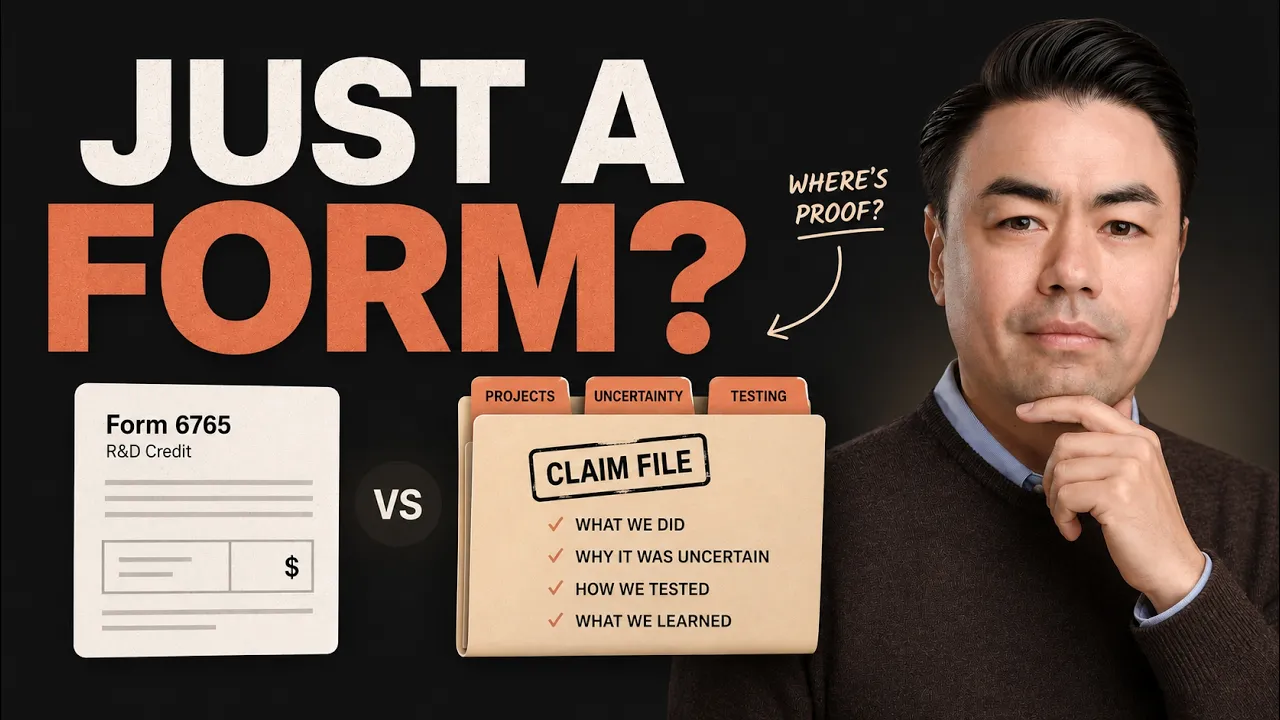
Understanding the nuances of R&D tax credits can be a daunting task, especially when it comes to ensuring your documentation can withstand an IRS audit. In my experience reviewing countless R&D credit studies, I've often found them lacking the necessary depth to survive such scrutiny. The common issue? Companies often have figures on forms, but nothing substantial to back them up.
The Three-Folder System: A Solution to Your Documentation Woes
Enter the three-folder documentation system. This method not only organizes your data effectively but aligns perfectly with IRS requirements. Let's dive into how you can structure your R&D documentation using this approach.
1. The Problem with Current R&D Credit Studies
Many tech companies, like the one I assisted this year, find themselves in a bind. They used generic R&D providers that delivered little more than a tax form—with figures that didn't make it onto tax returns. This oversight meant they left significant credits unclaimed, as seen when we discovered the actual credit was three times the initial value.
2. Understanding Contemporaneous Documentation
The IRS emphasizes the need for contemporaneous documentation, captured in real time as projects are underway. Yet, many companies already have 90% of the necessary information; it's just unorganized. With tools like Jira, Slack, and email, the critical task is to tag and structure this information to meet IRS standards.
3. Implementing the Three-Folder System
This system leverages existing work documentation by adding tags or organizing them into three essential folders:
Folder One: Conceptualization and Design
This folder contains documents related to the genesis and objectives of a project—think architecture documents, wireframes, and business justifications. These items meet the 'permitted purpose test' criteria from the IRS by answering key questions about the project's intention and improvements.
Folder Two: Technical Challenges
Document all technical hurdles encountered and the corresponding problem-solving processes. This includes bug reports, root cause analyses, and Slack threads discussing solutions. This evidences the IRS's requirement for technical uncertainty and the process of experimentation.
Folder Three: Testing and Validation
Here, you document QA scripts, test outcomes, and performance evaluations. This step closes the documentation loop, underscoring how challenges were met and illustrating the efficacy of your iterative processes.
4. Preparing for 2026 and Beyond: Introducing Section G
Looking ahead to tax year 2026, the IRS has revised Form 6765, adding a Section G. This mandates the disclosure of detailed project-level information, direct supervision, support breakdowns, and expense categorization. With the three-folder system, compiling this information becomes a straightforward exercise.
The Realities of an Audit and Its Consequences
Facing an IRS audit can be intimidating, but having comprehensive documentation mitigates much of that anxiety. With a robust system, most audits involve providing requested documents, answering follow-up questions, and reaching resolutions with minimal angst. Conversely, getting this wrong can incur costs. Incorrect claims can lead to a loss of credit, compounding interest, and penalties.
In summary, the stakes of accurate R&D credit claims are high, but ensuring you're prepared is far simpler than it seems. Whether you choose to implement this system independently or seek support, having an organized, documented process can secure your credits and keep your operations running smoothly.
Conclusion
For those ready to streamline their R&D tax credit process, installing the three-folder system will transform potential chaos into order. This proactive approach secures your credits and safeguards future filings against potential pitfalls. By working in tandem with your CPA and leveraging existing documentation, you're well-equipped to claim the credits your company's innovative work deserves.
