


Author:
Chris Peters, CPA
Role:
Managing Director
Publish Date:
Starting a tech startup can be exhilarating, but it also requires navigating complex financials, especially when it comes to research and development (R&D) tax credits. If you're an engineering startup in your first year with a team of developers, you're potentially eligible for the R&D tax credit. This credit can provide significant financial relief, but the process of claiming it isn't straightforward. This guide will walk you through the steps to successfully claim your startup's R&D tax credit in 2026 and how to make it a seamless part of your annual routine.
Understanding the Basics Before You Begin
The journey to claiming your R&D tax credit starts with understanding your business. It's crucial to identify what you're building and why. The R&D tax credit isn't just about calculations or tax forms; it's about aligning your work with the IRS's definition of research and development. Consequently, you need to map your actual work to their definitions.
The Initial Steps
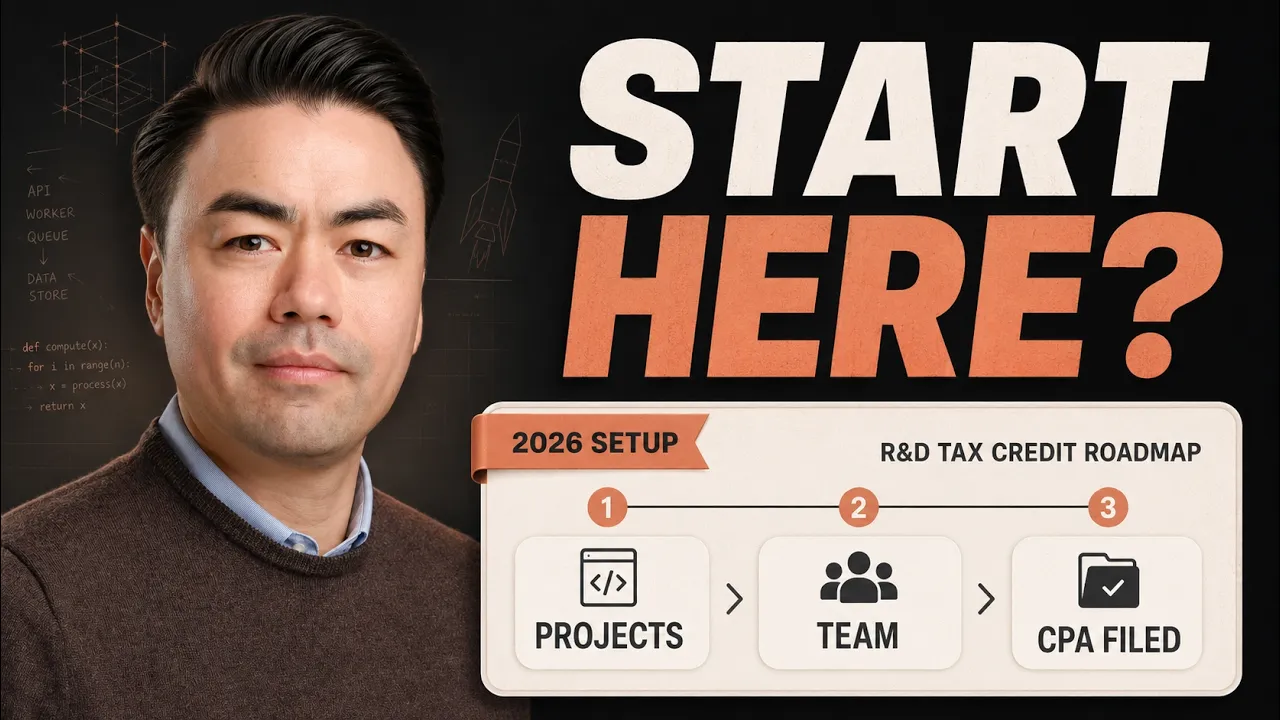
Document Your Projects: Begin by writing down the projects you worked on during the year in simple English. Focus on what you were attempting to build, the challenges, and the experiments you conducted.
Evaluate Your Team: Identify who is on your payroll, who your contractors are, and what R&D supplies you have. It's essential to know the geographical location of each team member as US-based W-2 engineers can account for up to 100% of their wages towards the credit.
Gather Financial Data: Collect basic financial data, like box one W-2s, employee rosters, job titles, and locations. Accurate financial data is key to fitting your work into the larger R&D tax credit puzzle.
Conducting the R&D Study
After establishing a foundation, the actual study entails two main aspects: conversations and calculations. Begin with a technical interview with a key figure like the founder, CTO, or head of product to understand the technical uncertainties and solutions involved in your projects. The IRS's four-part test will determine if your work qualifies as R&D. The test asks about the nature of your development, the novelty of your work, and the experimental approach used to solve problems.
The Role of Math in Claiming the Credit
Calculating your credit is less daunting when you know the typical credit range is between 7 to 10% of your qualified spend. For example, a $1 million US engineering payroll can potentially yield $70,000 to $100,000 in credit.
Real-Life Application
Consider the example of a space tech company with 16 engineers and $1.7 million in payroll. Despite using two automated providers, their credit was never applied to their tax return due to poor coordination with their CPA. By rebuilding the study and coordinating directly, they successfully claimed significant federal and state credits.
Establishing a Long-term Process
Many startups make the mistake of treating the R&D claim process as a one-off project. However, turning it into a regular, automated process like payroll ensures documentation remains contemporaneous and accurate. Regular quarterly check-ins with your team to document development can remove year-end scrambles. Such continuity ensures the R&D credit process becomes seamless and predictable.
Conclusion
The R&D tax credit can be a powerful tool for pre-revenue startups, especially when utilized effectively. The key to success is in capturing detailed documentation and maintaining a consistent, automated process. Whether you choose to handle this internally or with specialized assistance, the roadmap outlined here can guide your startup to claim every eligible dollar effectively.
Remember, individual tax situations can vary greatly. It's always wise to consult a tax professional who aligns with your specific needs to maximize benefits. For those who prefer expert guidance, services exist to streamline the process, ensuring your credits directly contribute to your growth. Ultimately, proactive planning today saves you crucial funds that could fuel tomorrow's innovation.
