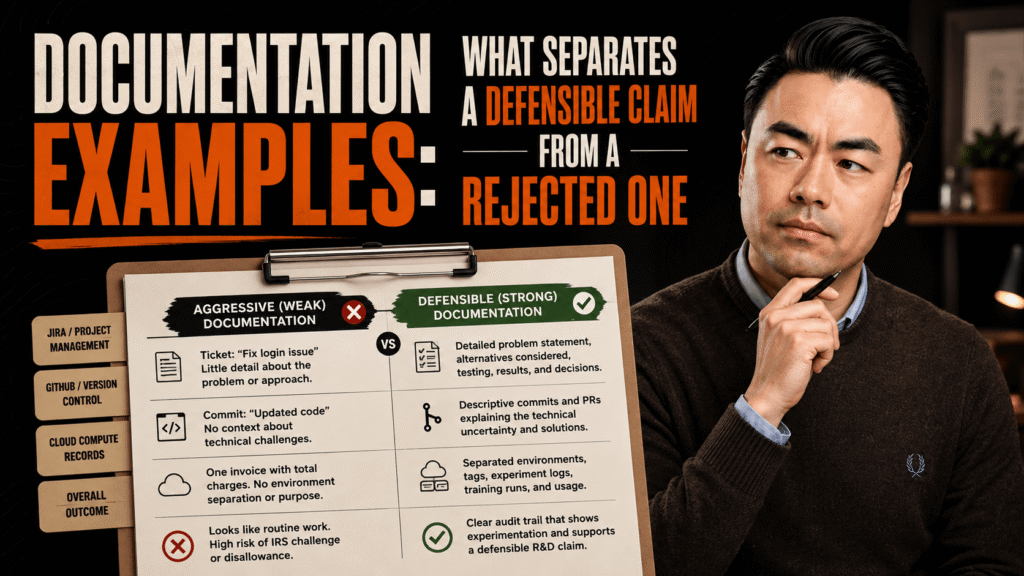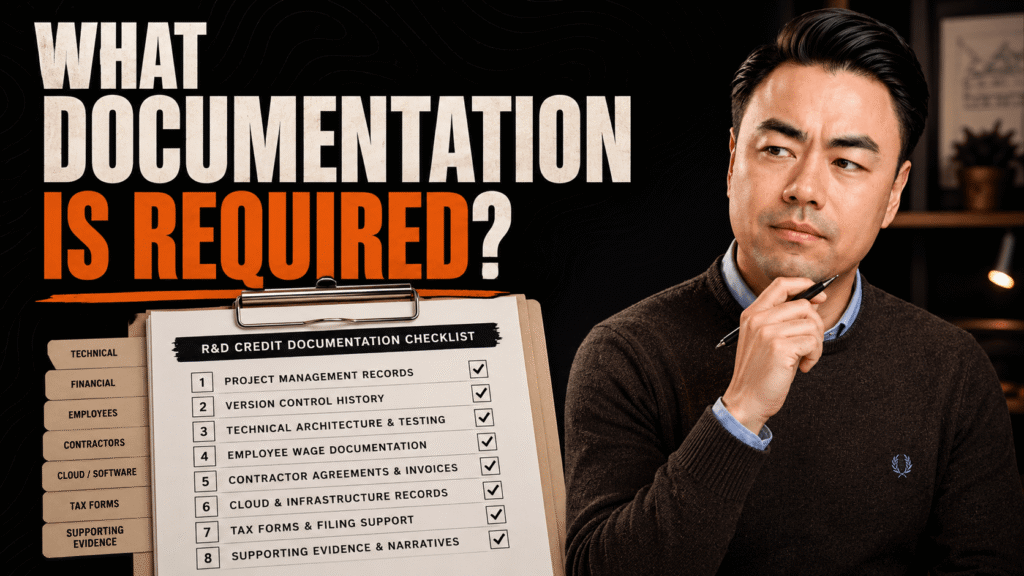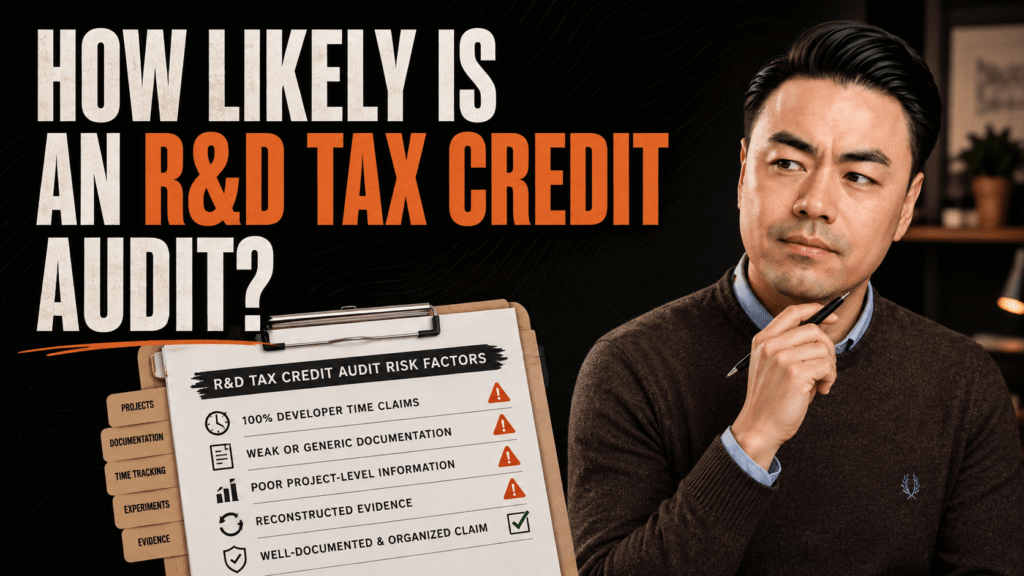
The strongest R&D tax credit claim is not the one with the highest number on the worksheet. It is the one that can survive an IRS review. An aggressive claim may create a larger short-term benefit, but a defensible claim creates reliable, long-term value because every dollar is supported by documentation, realistic assumptions, and a clear connection between your research activities and expenses.
The IRS requires taxpayers to maintain records that substantiate both the eligibility of the research activities and the amount of qualified research expenses claimed. If documentation cannot support the claim, the credit can be challenged or reduced.
For startups, the difference between an aggressive claim and a defensible claim often comes down to one question:
Are you trying to maximize the credit calculation, or maximize the credit you actually get to keep?
Aggressive R&D Claims: Maximizing Numbers, Increasing Risk
An aggressive claim usually focuses on capturing the largest possible credit amount by making broad assumptions about qualifying activities.
Common characteristics include:
- Claiming 95% 100% of engineering time as qualified research
- Including borderline activities such as routine bug fixes, UI improvements, or general maintenance
- Using year-end estimates instead of real-time records
- Creating broad technical narratives that describe innovation without project-specific evidence
This approach can look attractive because startups often have expensive engineering teams and significant development costs.
However, the problem is that engineering work is rarely 100% research.
Developers spend time on:
- Internal meetings
- Documentation
- Customer support
- Production maintenance
- Administrative tasks
- Routine improvements
Claiming every hour as qualified research creates a credibility problem.
The IRS evaluates whether taxpayers can support the activities and expenses claimed with reliable records, rather than relying only on estimates or generalized explanations.
The Hidden Cost Of An Overly Aggressive Claim
Many founders think the biggest risk is claiming too little.
The bigger risk is building a credit amount that cannot be defended.
A large credit that gets reduced during an audit does not improve your runway. It creates additional financial pressure through:
- Credit repayment
- Additional interest
- Potential penalties
- Unexpected cash outflow
This is why documentation strategy matters as much as calculation strategy.
A startup that claims $200,000 and keeps it is better positioned than a startup that claims $400,000 but cannot substantiate half of it.
Defensible R&D Claims: Building An Audit-Ready Asset
A defensible claim uses conservative assumptions and connects every claimed expense to actual research activity.
Strong claims typically include:
Realistic Employee Time Allocation
Instead of assuming every engineer spends 100% of their time on qualifying research, companies separate:
- Experimental development work
- Technical problem-solving
- Architecture improvements
from:
- Routine maintenance
- Internal operations
- Non-technical activities
This creates a more credible calculation.
Contemporaneous Engineering Evidence
A defensible claim is supported by records created during development, such as:
- Jira tickets
- GitHub commits
- Pull request discussions
- Architecture documents
- Testing results
- Performance benchmarks
These records show the progression from technical uncertainty to experimentation and final solution.
This connects directly with What Documentation Is Required? because the goal is not simply collecting documents. The goal is creating a timeline proving why the work qualified.
Clear Project-Level Mapping
Strong claims identify:
- Which projects involved qualified research
- Which employees contributed
- What technical challenges were addressed
- Which expenses supported those activities
The IRS has emphasized the importance of identifying business components, research activities, and related expenses when evaluating research credit claims.
The Startup Lesson: More Credit Does Not Always Mean More Cash
We learned a painful lesson by confusing aggressive optimization with actual financial protection.
During our early growth stage, we wanted to maximize our immediate cash benefit, so we pushed our R&D claim toward the highest possible allocation. We counted nearly every engineering hour, included questionable activities, and relied heavily on documentation created after the work was already completed.
At first, the larger credit looked like a major runway extension.
The problem appeared when we had to prove it.
Our engineering team was building valuable technology, but our records did not clearly separate true experimentation from normal product development. We had technical talent, but we lacked the audit trail needed to defend our claim.
The experience changed how we viewed R&D credits.
The goal is not creating the biggest possible claim.
The goal is creating the strongest possible claim.
The Defensible Claim Advantage
A defensible R&D credit strategy gives founders:
- Greater confidence during an IRS review
- More predictable financial planning
- Stronger documentation for future years
- Less risk of losing previously claimed credits
The best R&D credit strategy sits between two extremes:
Too conservative: Leaving valuable qualifying expenses unclaimed.
Too aggressive: Claiming unsupported expenses that cannot survive scrutiny.
The winning approach is disciplined accuracy.
Your R&D credit should reflect the real innovation your team created, supported by evidence that tells the same story as your tax return.
That is how a tax incentive becomes a reliable business asset instead of a future liability. for more better understanding about Documentation Examples What Separates A Defensible R&D Claim From A Rejected One you can go through our documentation example guide .