The IRS does not approve an R&D tax credit claim because a company built something innovative. It approves the claim because the company can prove how the innovation happened. Strong R&D documentation connects your technical work, your employees, and your expenses into a clear audit trail created while the research was taking place.
Many startups make the mistake of treating documentation as a year-end tax project. They recreate technical explanations months later, gather scattered invoices, and try to explain what their engineers were building after the fact. That approach creates unnecessary risk.
A defensible R&D credit claim answers two questions:
- Did your activities qualify under the IRS Four-Part Test?
- Can you prove the expenses claimed were directly connected to those activities?
Technical Documentation: Proving The Research Actually Happened
The first challenge is proving that your team was solving technical uncertainty through experimentation. This is where your everyday engineering workflow becomes your strongest evidence.
Project Management Records
Tools like Jira, Linear, Asana, or similar platforms can demonstrate the evolution of a technical problem.
Strong documentation shows:
- The original technical uncertainty
- Different solutions considered
- Testing performed
- Failed approaches
- Final implementation decision
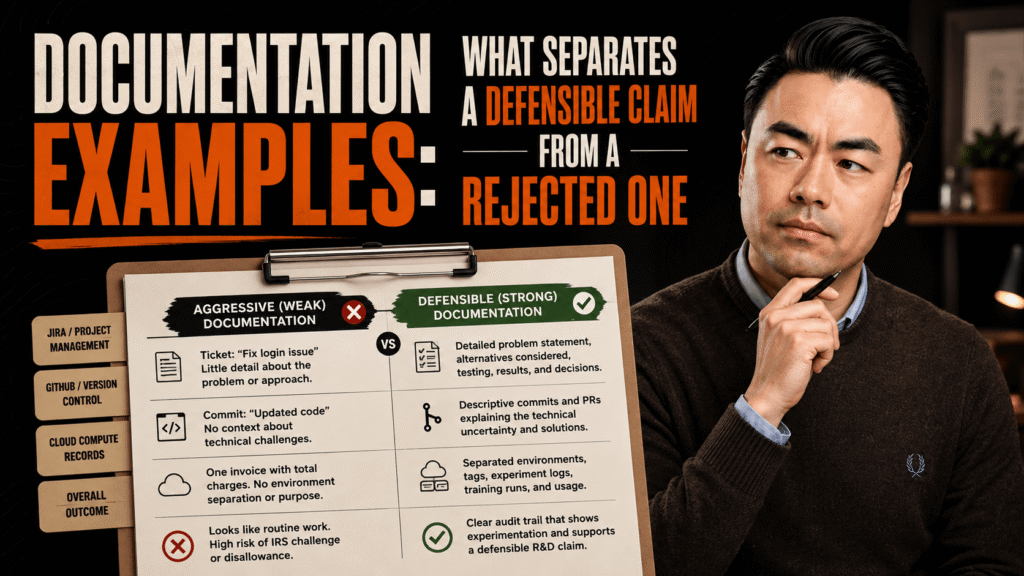
A ticket that says “Improve performance” provides little value.
A ticket that explains:
“Current database architecture cannot handle expected query volume. Team tested three indexing approaches and benchmarked latency results.”
creates a much stronger connection to the research process.
This type of project history helps demonstrate the experimentation process required for R&D qualification.
Version Control History
GitHub, GitLab, and similar platforms create a timeline of technical development.
Useful records include:
- Commit history
- Pull requests
- Code review discussions
- Branch comparisons
- Engineering comments
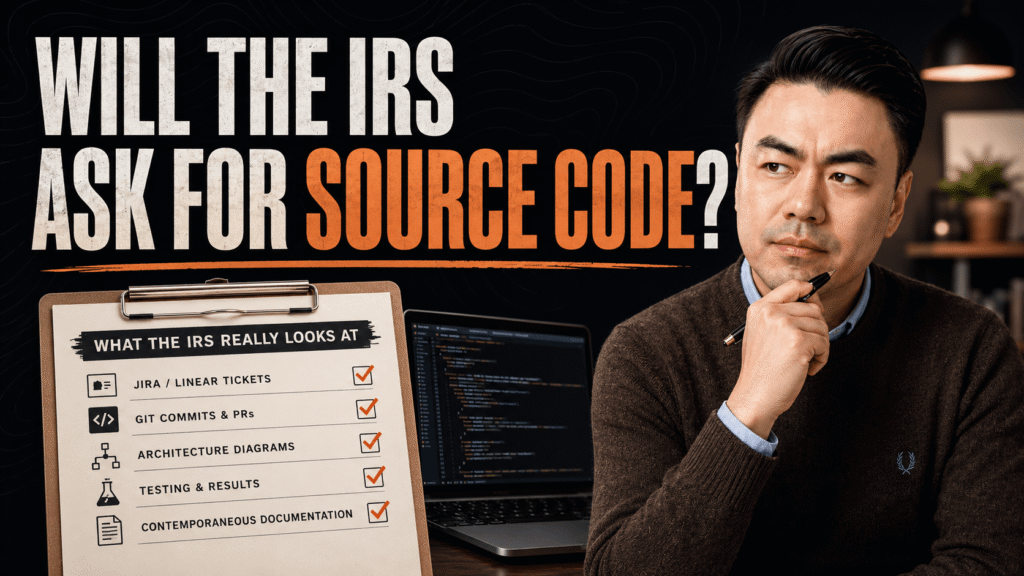
The goal is not to show the IRS every line of proprietary code. Instead, these records demonstrate that engineers were actively testing, modifying, and improving technical solutions.
This connects directly with the concern many founders have:
“Will The IRS Ask For Source Code?”
Usually, the stronger your supporting documentation is, the less likely you are to rely on exposing sensitive intellectual property.
Technical Architecture And Testing Records
Additional evidence can include:
- System architecture diagrams
- Database designs
- API documentation
- Performance benchmarks
- Automated test results
- Error logs
- Experiment results
These records show the difference between routine development and true technical experimentation.
Financial Documentation: Connecting Dollars To Research
Technical evidence alone is not enough. You must also prove that your claimed expenses are tied to qualified research activities.
This is where many startups lose valuable credits.
Employee Wage Documentation
For employees involved in qualifying research, maintain:
- Payroll records
- W-2 wage information
- Job roles
- Department assignments
- Time allocation records
A developer salary does not automatically qualify just because someone works in engineering.
You need to demonstrate what percentage of their time was spent performing qualified research activities.
This is why understanding The Hidden Value Inside Product Development Costs is important. Engineering payroll is often the largest QRE category, but only when properly connected to qualifying work.
Contractor Agreements And Invoices
Contractor documentation is one of the most overlooked areas.
Many startups assume:
“They wrote the code, and we paid the invoice, so the expense qualifies.”
That assumption can create problems.
For contract research expenses, the IRS looks closely at agreements, invoices, and whether the research was performed on behalf of the taxpayer under qualifying conditions. Contract research expenses are generally limited to 65% of eligible payments.
Your documentation should include:
- Independent contractor agreements
- Statements of work
- Vendor invoices
- Description of technical services performed
- Evidence that your company retained rights to the research results
A weak contractor agreement can turn a valuable expense category into a rejected claim.
Cloud And Infrastructure Records
For software and AI companies, cloud expenses can represent a significant research investment.
Maintain:
- AWS, Azure, or Google Cloud invoices
- Account segmentation
- Project tags
- Development environment records
- Training or testing usage logs
The goal is separating qualifying research infrastructure from normal production operations.
Tax Forms And Filing Support
Your documentation must ultimately support the federal filing process.
Key records include:
- IRS Form 6765 Credit for Increasing Research Activities
- Project-level expense breakdowns
- Payroll offset election documentation when applicable
- IRS Form 8974 for qualified small business payroll tax credit claims
The IRS research credit guidance emphasizes maintaining supporting records that substantiate both the calculation and eligibility of claimed expenses.
The Biggest Documentation Mistake Startups Make
The most expensive mistake is waiting until tax season to build the story.
Your engineering team is already creating the evidence:
- Jira tickets
- Git commits
- Testing results
- Architecture decisions
- Cloud records
The problem is that many startups never organize those records around the IRS qualification requirements.
Audit defense is not created when the IRS sends a letter.
It is created every day your engineers document why they tried something, what failed, and how they solved it.
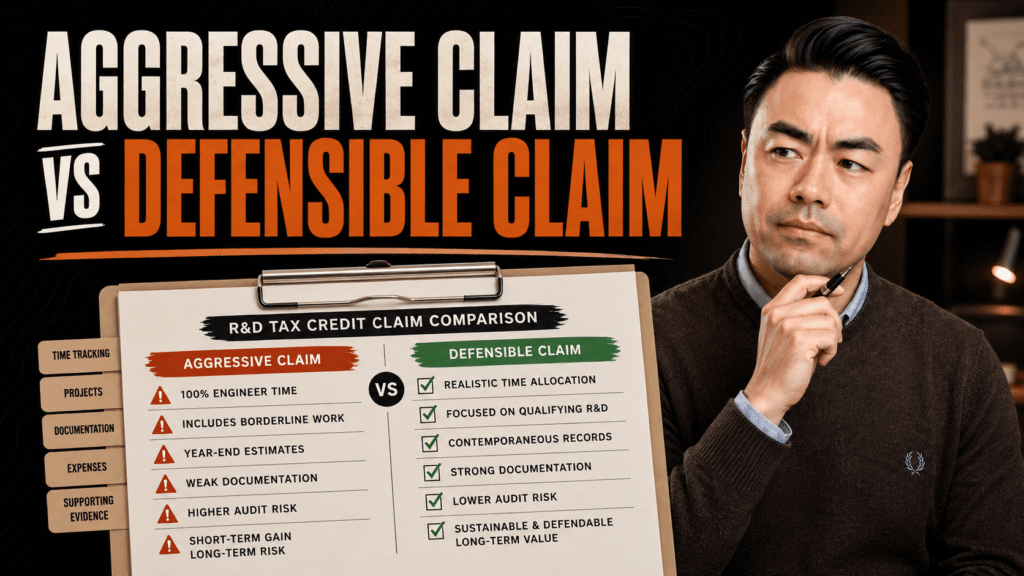
That is the difference between an aggressive claim and a defensible claim.