The difference is simple: the payroll tax offset can turn an R&D tax credit into near-term payroll tax savings, while the traditional income tax credit is generally more valuable when a company has current or future income tax liability. For founders, the right choice depends less on the size of the credit and more on when the company can actually use it.
Most of the startup founders misjudge the income tax credit with the payroll offset . They find this a little confusing because at first both feel the same but they are different and it’s very important for you as a founder to understand the difference between the R&D tax credit and Income tax credit . which i try to explain in the easiest possible way to you guys .
Payroll Offset vs. Income Tax Credit
Both options start with the same federal R&D tax credit. The difference is where you apply the benefit.
| Payroll Tax Offset | Income Tax Credit | |
| Best suited for | Early-stage, pre-revenue or unprofitable startups | Companies with income tax liability |
| Applied against | Eligible employer payroll taxes | Federal income tax liability |
| Maximum payroll election | Up to $500,000 annually, subject to applicable limits | No equivalent payroll-election cap |
| Cash-flow impact | Can reduce eligible payroll tax payments | Reduces current or future income tax |
| Key requirement | Must satisfy qualified small business rules | Must have qualifying R&D expenses |
For a startup still investing heavily in engineering, that difference can be significant.
When the Payroll Offset Makes More Sense
The payroll option is particularly valuable when your company has qualifying R&D expenses but little or no income tax liability.
Imagine a SaaS startup spending heavily on U.S. engineering wages while still operating at a loss. It may generate a meaningful R&D credit, but there may be little current income tax to offset.
The payroll election gives that startup another way to use the credit: against eligible employer payroll taxes.
That can preserve cash that would otherwise leave the business through payroll tax payments.
And for a startup managing a tight runway, cash retained today can be more useful than a tax benefit that may not be usable for years.
When the Income Tax Credit May Be Better
The traditional income tax route becomes more relevant when a company is profitable or expects to have sufficient federal income tax liability to use its credit.
The credit can reduce federal income tax liability, and unused credits may generally be subject to applicable carryback or carryforward rules.
This means founders shouldn’t automatically assume that the payroll offset is always superior.
A company with substantial taxable income may have a straightforward path to using its R&D credit against income tax. Meanwhile, an eligible startup with no meaningful income tax liability may place a much higher value on payroll tax relief.
The goal isn’t to choose the option that sounds bigger. It’s to choose the utilization method that creates the most practical value for the company’s financial position.
The $500,000 Payroll Election Matters
One important limitation is the payroll election’s annual maximum.
An eligible small business can elect up to $500,000 per year of its R&D credit for the payroll tax offset, subject to the applicable rules and limitations.
If your calculated R&D credit exceeds the amount you can use through the payroll election, that does not necessarily mean the remaining credit disappears. The unused amount may have value through the applicable income-tax-credit rules.
That’s why calculating the R&D credit and deciding how to use it should be treated as two related but separate decisions.
The Deadline Founders Cannot Ignore
This is where we learned an expensive lesson.
We were operating at a loss and desperately needed the cash-flow benefit of the payroll offset. We calculated the R&D credit correctly but treated Form 6765 like something we could finalize later.
We were wrong.
The payroll tax credit election has specific timing requirements. Missing the election deadline can prevent a company from getting the payroll-tax treatment it was counting on.
Our mistake wasn’t the R&D calculation. It was treating the utilization election as administrative paperwork rather than a financial decision with a deadline.
For a startup depending on every dollar of runway, that distinction matters.
So Which One Should Your Startup Choose?
Use the payroll tax offset when you’re an eligible small business with qualifying R&D expenses and limited income tax liability, and preserving near-term cash flow is the priority.
The income tax credit may make more sense when your company has sufficient taxable income or when the payroll election isn’t available.
The important point is to make the decision before filing, not after.
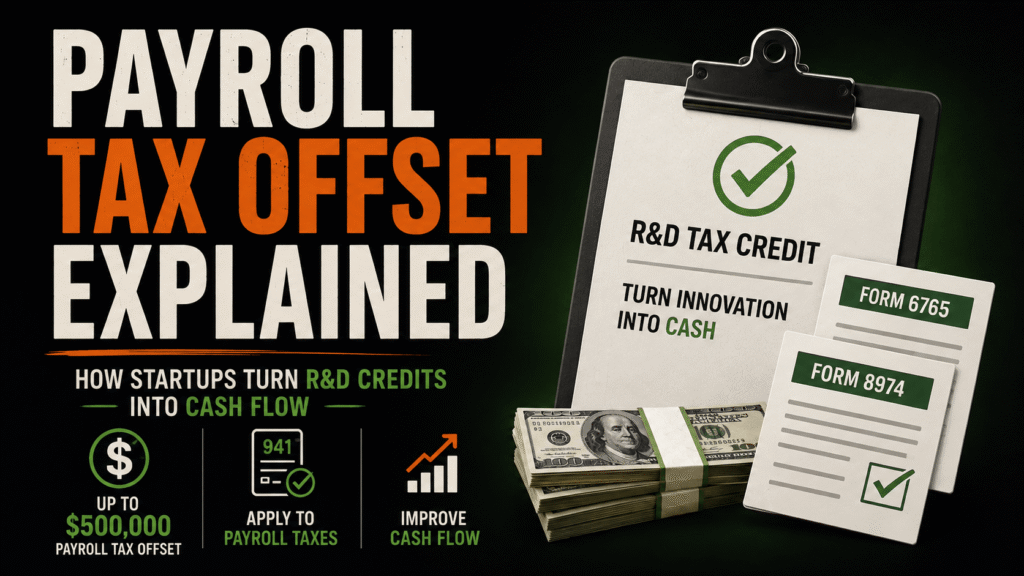
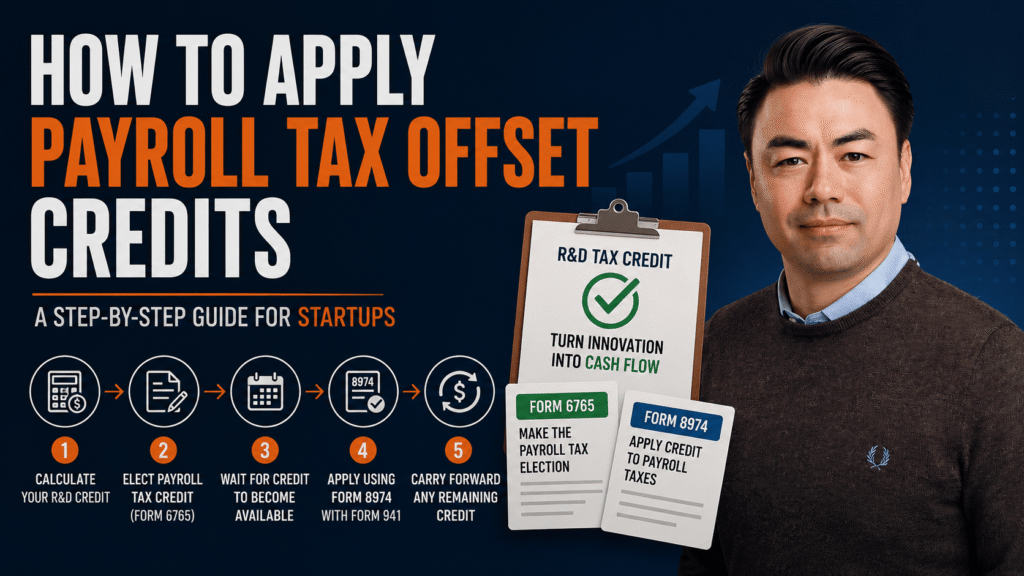
If you haven’t already, start with Payroll Tax Offset Explained to understand the eligibility requirements and mechanics. Then review How To Apply Payroll Offset Credits to understand the filing process and timing.