Numbers tell a story, and when it comes to the Federal R&D Tax Credit, they reveal one of the most important things: that many startups are leaving money on the table every year unclaimed that can find their startup and solve their cash crunch .
From payroll tax offset limits to gross receipt thresholds, understanding these statistics helps founders make smarter financial decisions before tax season arrives. At R&D Tax Advisors, we’ve found that many businesses don’t miss the credit because they fail to qualify. They miss it because they misunderstand the rules behind the numbers.
1. Eligible Startups Can Offset Up To $500,000 In Payroll Taxes
Qualified startups may apply up to $500,000 of their Federal R&D Tax Credit against federal payroll taxes. This makes the credit especially valuable for businesses that are investing heavily in growth but have little or no income tax liability.
Many founders still believe tax credits only benefit profitable companies. In reality, the payroll tax election allows eligible startups to improve cash flow while continuing to invest in engineering, product development, and hiring.
This is why we use our Startup Cash Recovery Framework to identify opportunities that improve runway without requiring additional funding.
2. Businesses With Less Than $5 Million In Gross Receipts May Qualify
One of the most important eligibility thresholds is $5 million in annual gross receipts. Companies that meet the IRS requirements may qualify for the payroll tax election, making the Federal Research and Development Tax Credit accessible much earlier than many founders expect.
We often see startups dismiss the credit because they assume they need years of operating history. Understanding this threshold helps founders evaluate eligibility before leaving money on the table.
3. Most Companies Recover Approximately 6% To 10% Of Qualified Research Expenses
Many businesses recover between 6% and 10% of their Qualified Research Expenses, depending on their facts and the calculation method used.
Engineering wages, qualifying cloud computing costs, eligible contractor expenses, and research supplies can all contribute to the final credit calculation. The actual amount depends on documentation quality, expense classification, and the calculation methodology selected.
Our Credit Optimization Framework helps businesses identify every qualifying expense before performing the calculation.
4. Section 41 And Section 174 Serve Different Purposes
One of the most misunderstood statistics is not a percentage. It is the relationship between Section 41 and Section 174.
We have seen companies assume that claiming research expense deductions under Section 174 automatically maximizes their Federal Research Credit under Internal Revenue Code Section 41. They are separate tax provisions with different compliance requirements.
One of the biggest mistakes we encounter is businesses combining engineering wages, cloud costs, and research expenses into a single accounting pool without creating the detailed project-level documentation required for IRS Form 6765. That often results in underreported credits and unnecessary compliance risk.
This is why our Dual Compliance Framework treats Section 174 and Section 41 as complementary, but separate, parts of the R&D tax strategy.
5. State R&D Tax Credits Can Increase Your Total Savings
The Federal R&D Tax Credit is only part of the opportunity. You know several states offer additional tax incentives that can increase the total tax credit claim .
Programs such as the California R&D Tax Credit, Texas R&D Tax Credit, Arizona R&D Tax Credit, Georgia R&D Tax Credit, may provide additional tax savings depending on where your business performs qualified research. Just remember one thing more: each state has their own documentation process that you need to go through in order to claim taxes .
Evaluating both federal and State R&D Tax Credits creates a more complete tax strategy for innovative companies.
Continue Building Your R&D Tax Credit Knowledge
This article completes our introductory guide to the Federal R&D Tax Credit, but it is only the beginning.
To better understand how everything fits together, explore the rest of our learning hub:
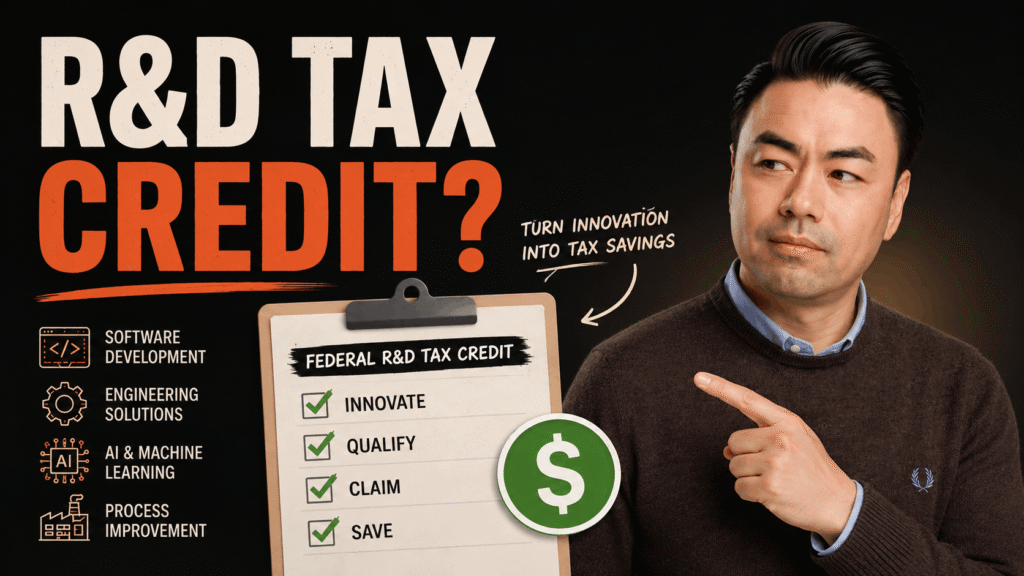
- Start here: What Is The R&D Tax Credit? to understand the fundamentals.
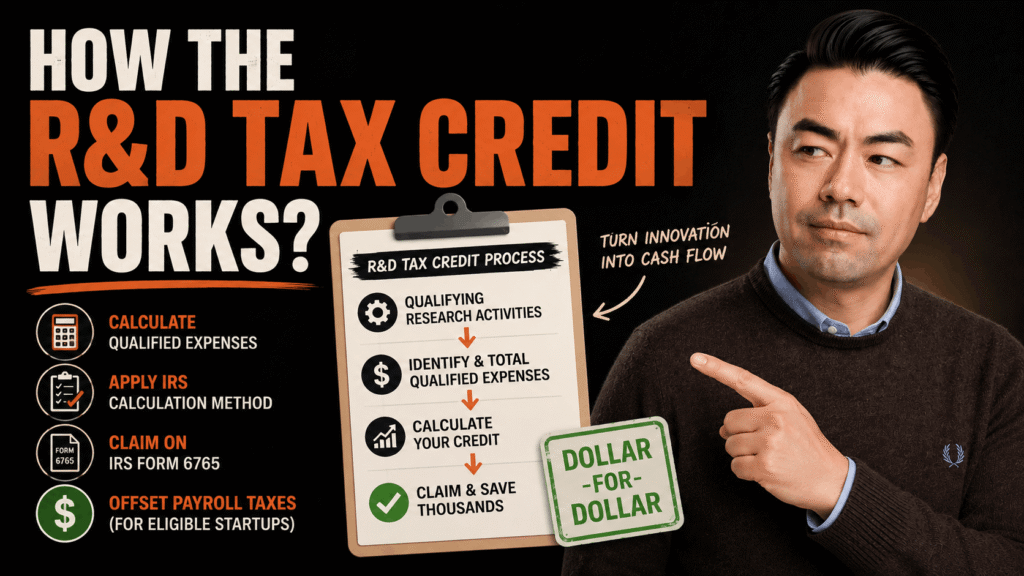
- Next: How The R&D Tax Credit Works to learn how the credit is calculated and claimed.
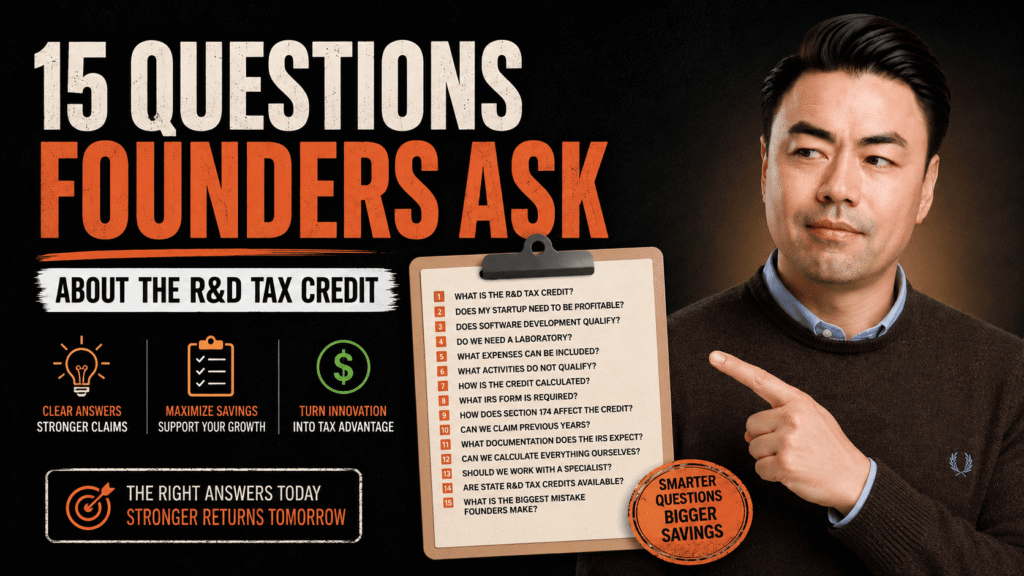
- Then: 15 Questions Founders Ask About The R&D Tax Credit for practical answers about qualification, documentation, Section 174, Internal Revenue Code Section 41, and filing requirements.
Together, these resources provide founders with a clear roadmap for understanding, claiming, and maximizing the Federal Research and Development Tax Credit while avoiding the costly mistakes that cause many startups to leave valuable incentives unclaimed.