
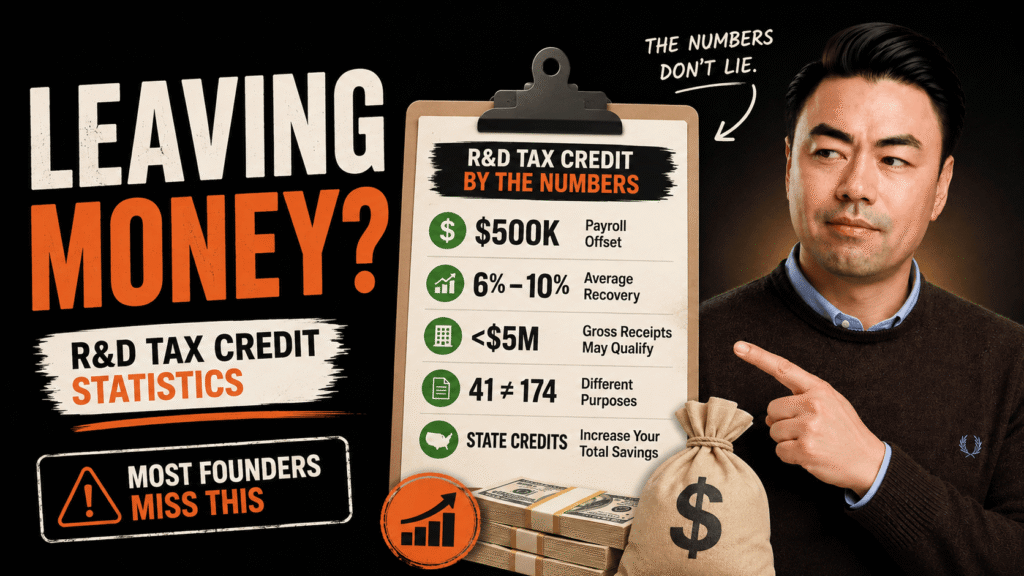
Most founders think the Federal R&D Tax Credit is only for pharmaceutical companies or businesses with large research laboratories. That is one of the biggest reasons startups leave valuable tax savings unclaimed.
The R&D Tax Credit is a dollar-for-dollar tax incentive that rewards businesses for developing or improving products, software, processes, or technology through qualified research activities under Internal Revenue Code Section 41. If you are building a SaaS platform, training AI model, designing engineering solutions or improving manufacturing processes, your company may already be eligible for Federal R&D tax credit
At R&D Tax Advisors, we often see innovative businesses miss this opportunity simply because they misunderstood what counts as research and development.
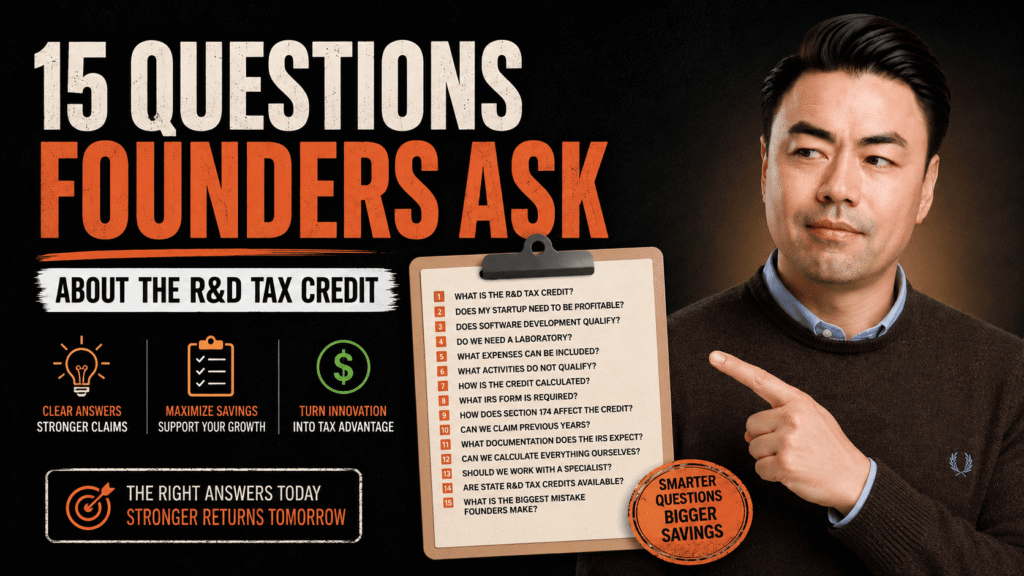
What Is The R&D Tax Credit?
The Federal R&D Tax Credit encourages companies to invest in innovation by reducing their federal tax liability for qualified research activities. Unlike a tax deduction, a tax credit directly reduces the amount of tax you owe to the government, making it one of the most valuable incentives available to growing and innovative businesses.
Many founders started taking pictures of scientists working in laboratories when they heard about “research and development.” In reality, the IRS applies to a much broader definition. Activities such as developing software, improving internal systems, designing new products, or solving engineering challenges can all qualify if they involve technical uncertainty and a process of experimentation.
For example, a startup building a new software platform may spend months testing different database architectures to improve scalability and performance. That engineering work could qualify even if the first solution failed.
This is why we use our Innovation Qualification Framework to evaluate the actual technical work being performed instead of relying on outdated assumptions about what R&D looks like.
What Expenses Can Qualify For The R&D Tax Credit?
Many companies underestimate their eligible expenses because they only look at engineering salaries. Qualified research expenses can extend far beyond payroll when they directly support research and development.
One of the biggest lessons we learned came from businesses that assumed cloud infrastructure and contractor costs were simply operating expenses. They tracked developer wages but completely ignored thousands of dollars spent each month on cloud environments used exclusively for software development and testing. Others failed to include the eligible portion of payments made to onshore contractors or overlooked employees who directly supervised research projects.
When these expenses are properly documented, they can significantly increase the value of a Federal Research and Development Tax Credit claim. That is why identifying every qualifying cost is just as important as identifying the qualifying projects themselves.
Our Qualified Research Expense Discovery Framework helps businesses uncover overlooked expenses before they become missed opportunities.
Why So Many Startups Miss The Credit
The biggest mistake is not failing to qualify. It is assuming you do not qualify. We regularly meet founders who believe they need to be profitable, operate a laboratory, or invent something completely new before they can claim the credit.
In reality, many startups are already performing qualifying research every day while developing software, testing new technologies, or improving products. The problem is that they fail to recognize those activities or document them properly until it is too late.
At R&D Tax Advisors, we combine technical reviews with tax expertise to help businesses identify qualifying activities, maximize the eligible expenses, and build documentation that supports a stronger claim.
What Should You Read Next?
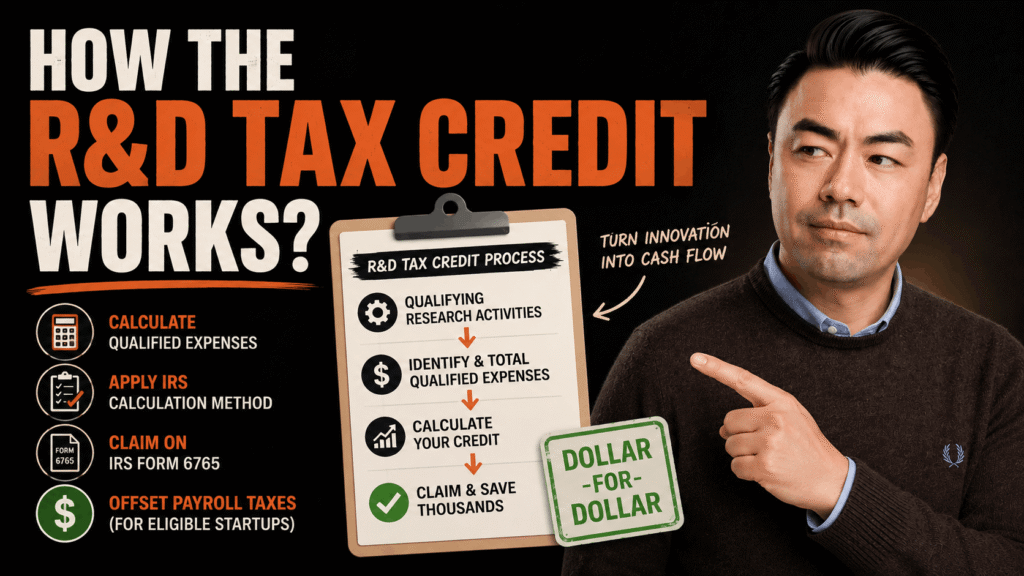
Understanding what the R&D Tax Credit is is only the first step. The next question most founders ask is how the credit is actually calculated and claimed.
Continue with our next guide: How The R&D Tax Credit Works, where we explain how qualified research expenses are calculated, how IRS Form 6765 fits into the process, and how eligible startups can benefit from the Federal R&D Tax Credit and Payroll Tax Offset.

[…] to the topic? Start with our guide What Is The R&D Tax Credit? to understand who qualifies and why so many startups miss this valuable investment […]
[…] here: What Is The R&D Tax Credit? to understand the […]
[…] here: What Is The R&D Tax Credit? to understand the […]
Comments are closed.