
Many founders are aware that the Federal R&D Tax Credit exists, but very few understand how it is actually calculated. This knowledge gap often leads businesses to underestimate their claim or miss valuable tax savings altogether.
The R&D Tax Credit works by calculating your Qualified Research Expenses, applying the appropriate IRS calculation method, and claiming the credit through IRS Form 6765. For eligible startups, the credit can also offset federal payroll taxes, this helps startups create an immediate cash flow instead of waiting until the business becomes profitable.This Also Motivate them to work harder as government is supporting them in their innovative idea
At R&D Tax Advisors, we often find that several companies are performing qualifying research but are unaware about the R&D tax credit value and losing money on the table because they treat the calculation as a simple tax filling rather than a structured tax strategy.
How Is The R&D Tax Credit Calculated?
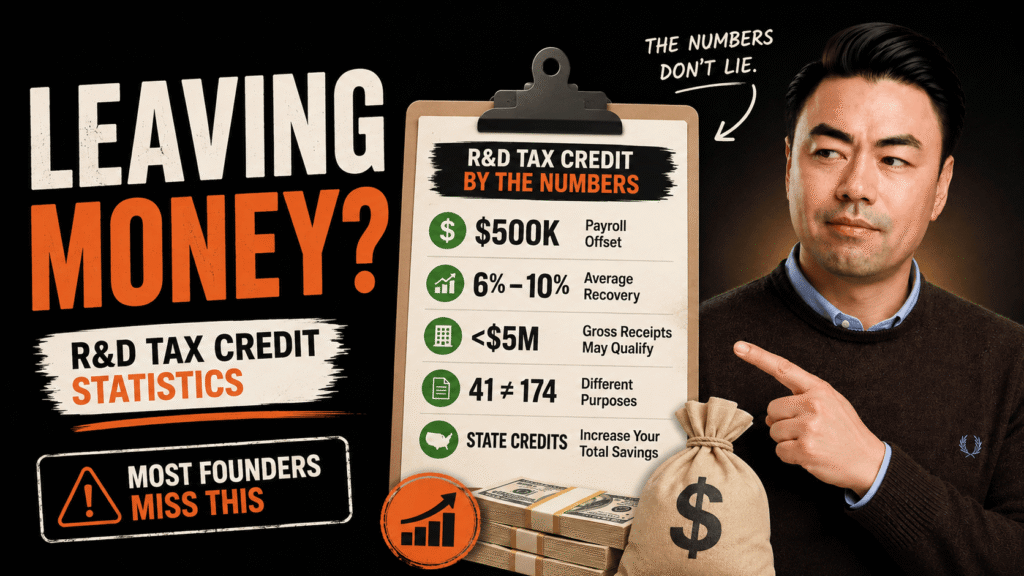
The value of the Federal Research and Development Tax Credit depends on your Qualified Research Expenses, historical spending, and the IRS calculation method used. Most businesses calculate the credit using either the Alternative Simplified Credit or the Regular Research Credit.
Qualified Research Expenses typically include eligible engineering wages, certain contractor costs, supplies used during research, and qualifying cloud computing expenses related to software development. Once these expenses are identified, the IRS calculation method determines the final credit amount.
One mistake we see repeatedly is founders assuming every company receives the same percentage back. In reality, two businesses with similar engineering costs can receive different credits because of their historical research spending and financial history.
This is why we use our Credit Optimization Framework to evaluate every available calculation method before preparing a claim.
Why Documentation Matters More Than The Calculation
Calculating the credit is only half the process. Without proper documentation, even legitimate claims become difficult to defend.
One of the most expensive lessons I personally have seen came from startups is that they invested heavily in software development but never tracked their research activities. They knew what they spent but could not explain to the federal government how those expenses related to technical uncertainty or experimentation.
So I believe Development records such as project documentation, engineering notes, Git repositories, architecture diagrams, and project management systems help connect research expenses to qualifying activities. Strong documentation not only supports the calculation but also strengthens the claim if questions arise later.
Our Research Evidence Framework helps businesses organize technical and financial records before tax season instead of trying to rebuild them months later.
How Do You Claim The R&D Tax Credit?
The R&D Tax Credit is generally claimed by filing IRS Form 6765 with your federal income tax return. Eligible startups may also use the credit to reduce federal payroll taxes if they meet the IRS requirements for the payroll tax election.
One mistake we frequently see is that most of the businesses focus only on filing the forms while overlooking the strategy behind the calculation. We have worked with companies that accepted the first calculation they received without comparing available methods or reviewing whether every qualified expense had been captured.
Maximizing the credit starts long before tax season. It requires identifying qualifying projects, tracking expenses throughout the year, and selecting the calculation method that produces the strongest result.
That is why our End-to-End R&D Credit Process combines technical qualification, expense identification, calculation analysis, and documentation into one streamlined approach.
What Should You Read Next?
Understanding how the credit works is an important step, but founders often have practical questions about qualification, documentation, audits, and filing requirements.
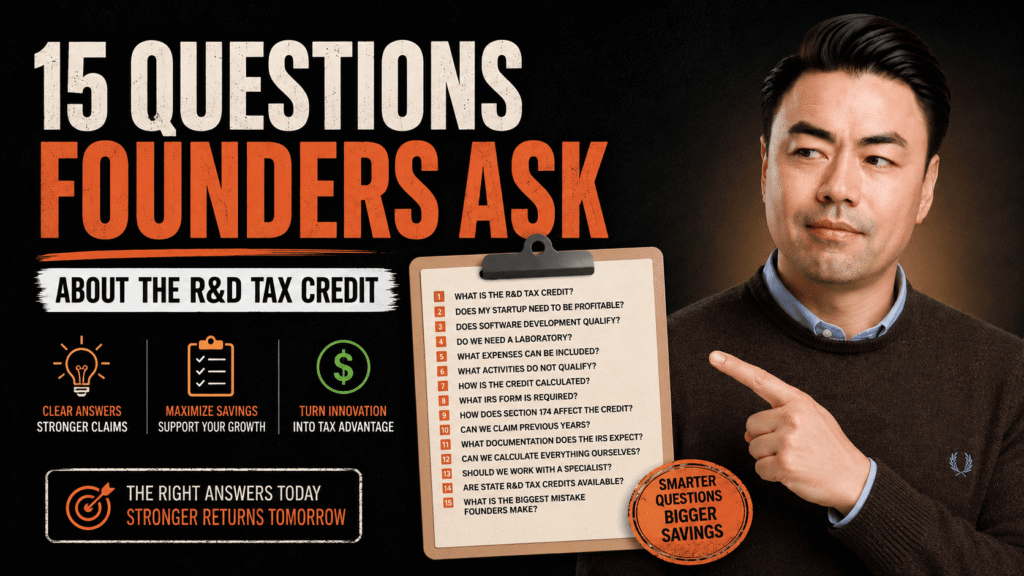
Continue with our next guide: 15 Questions Founders Ask About The R&D Tax Credit, where we answer the most common questions startups have about eligibility, Internal Revenue Code Section 41, Section 174, Federal R&D Tax Credits, and how to maximize every available opportunity.
New to the topic? Start with our guide What Is The R&D Tax Credit? to understand who qualifies and why so many startups miss this valuable investment .


[…] with our next guide: How The R&D Tax Credit Works, where we explain how qualified research expenses are calculated, how IRS Form 6765 fits into the […]
[…] How The R&D Tax Credit Works to learn how credits are calculated, claimed, and optimized for […]
[…] How The R&D Tax Credit Works to learn how the credit is calculated and […]
Comments are closed.