
Most founders don’t miss the Federal R&D Tax Credit because they are ineligible. They miss it because it’s too confusing for them along with the fact that they never get the required clear answers to the questions that matter to them .
Below are the questions we hear mostly at R&D Tax Advisors. These answers will help you understand how the Federal Research and Development Tax Credit, Internal Revenue Code Section 41, and Section 174 apply to growing businesses.
1. What Is The R&D Tax Credit?
The Federal R&D Tax Credit is a dollar-for-dollar tax incentive for businesses investing in qualified research and development activities. It rewards companies to motivate them on their path as to develop or improve products, software, manufacturing processes, or technology within the United States.
If you are new to the topic, start with our guide What Is The R&D Tax Credit? before reading further.
2. Does My Startup Need To Be Profitable?
No. Profitability is not required. Eligible startups may use the credit to offset federal payroll taxes, making it more valuable even for pre-revenue businesses. As we all know, most innovative companies raise capital to fund their startups . so for them this is the ideal case scenario .
This is one of the biggest misconceptions we encounter among founders.
3. Does Software Development Qualify?
Yes. Many software companies qualify because they solve technical uncertainty through testing, coding, prototyping, and system improvements.
Building SaaS products, AI applications, APIs, internal platforms, or automation tools may all qualify when the work satisfies the IRS requirements.
4. Do We Need A Laboratory?
No. The IRS does not require a research laboratory.
Engineering teams, software developers, manufacturers, biotech companies, and product developers frequently qualify without performing laboratory research.
5. What Expenses Can Be Included?
Qualified Research Expenses may include engineering wages, certain contractor costs, supplies, and qualifying cloud computing expenses used during development.
Many founders only track developer salaries and overlook other eligible expenses that increase the overall credit.
6. What Activities Do Not Qualify?
Routine maintenance, customer support, market research, cosmetic design changes, and research performed outside the United States generally do not qualify for the Federal Research Credit.
Understanding this distinction helps avoid overstating a claim.
7. How Is The Credit Calculated?
The IRS calculates the credit using Qualified Research Expenses and approved calculation methods such as the Alternative Simplified Credit or the Regular Research Credit.
Selecting the right method can significantly affect the final credit amount.
Learn more in our guide How The R&D Tax Credit Works.
8. What IRS Form Is Required?
Most businesses claim the credit by filing IRS Form 6765 with their federal income tax return.
For startups using the payroll tax election, additional payroll reporting requirements also apply.
9. How Does Section 174 Affect The Credit?
Section 174 and the Federal R&D Tax Credit are related but different.
Section 174 governs how research expenses are treated for tax purposes, while Internal Revenue Code Section 41 governs the tax credit itself. Both require careful planning.
10. Can We Claim Previous Years?
Yes, in many cases.
If your business qualified but never claimed the credit, amended returns may allow you to recover missed opportunities, depending on the applicable filing deadlines.
11. What Documentation Does The IRS Expect?
The IRS expects businesses to maintain records that connect research activities to qualifying expenses.
Examples include project documentation, engineering notes, Git repositories, design documents, testing records, and project management systems.
12. Can We Calculate Everything Ourselves?
Many founders try, but they often underestimate the documentation requirements.
One of the biggest mistakes we see is companies relying on high-level expense summaries instead of maintaining project-level evidence. When documentation is incomplete, even qualifying activities become difficult to support.
That is why we developed our Founder Documentation Framework, helping businesses organize technical and financial evidence before tax season rather than scrambling afterward.
13. Should We Work With A Specialist?
General tax preparation and R&D tax consulting are not the same.
A specialist understands both the tax regulations and the technical work performed by engineering teams, making it easier to identify overlooked qualifying activities and maximize available credits.
14. Are State R&D Tax Credits Available?
Yes. Many businesses may qualify for State R&D Tax Credits in addition to the federal credit, depending on where they operate.
Combining federal and state incentives can substantially increase overall tax savings.
15. What Is The Biggest Mistake Founders Make?
Waiting until tax season.
The strongest R&D tax credit claims begin long before returns are filed. Businesses that track projects, engineering time, technical uncertainty, and qualifying expenses throughout the year consistently place themselves in a much stronger position.
At R&D Tax Advisors, our Credit Readiness Framework helps founders identify qualifying work, organize documentation, and prepare stronger claims before filing deadlines arrive.
Continue Your Learning
If you are still learning and understanding about the Federal R&D Tax Credit, these guides are the best next steps to help you out :
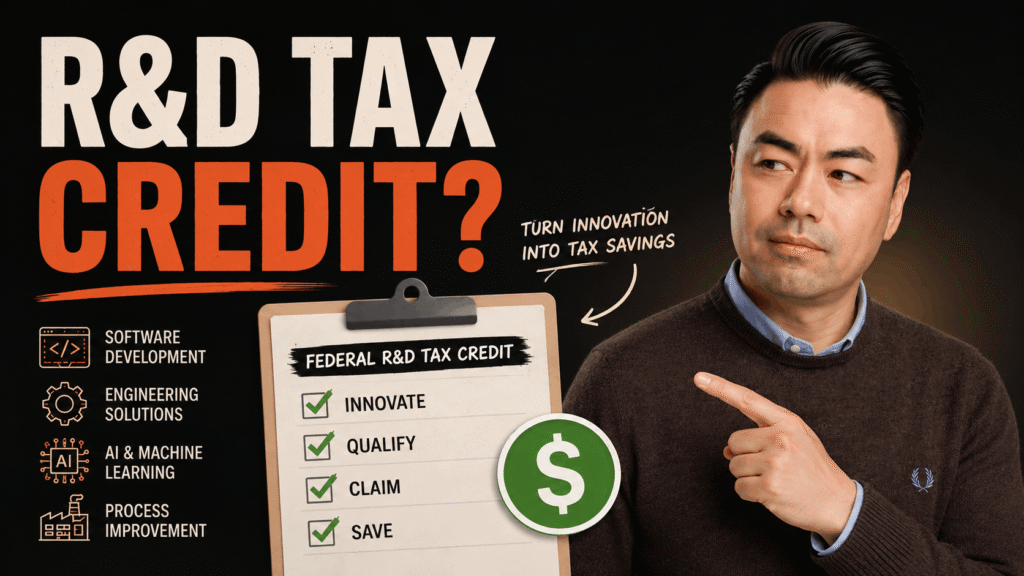
- Start here: What Is The R&D Tax Credit? to understand the basics.
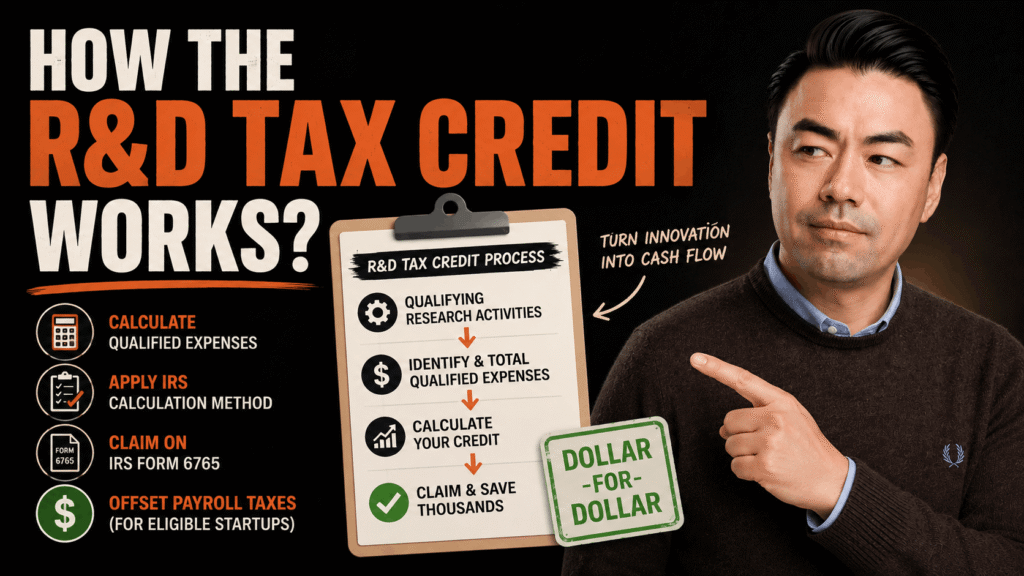
- Next: How The R&D Tax Credit Works to learn how credits are calculated, claimed, and optimized for businesses
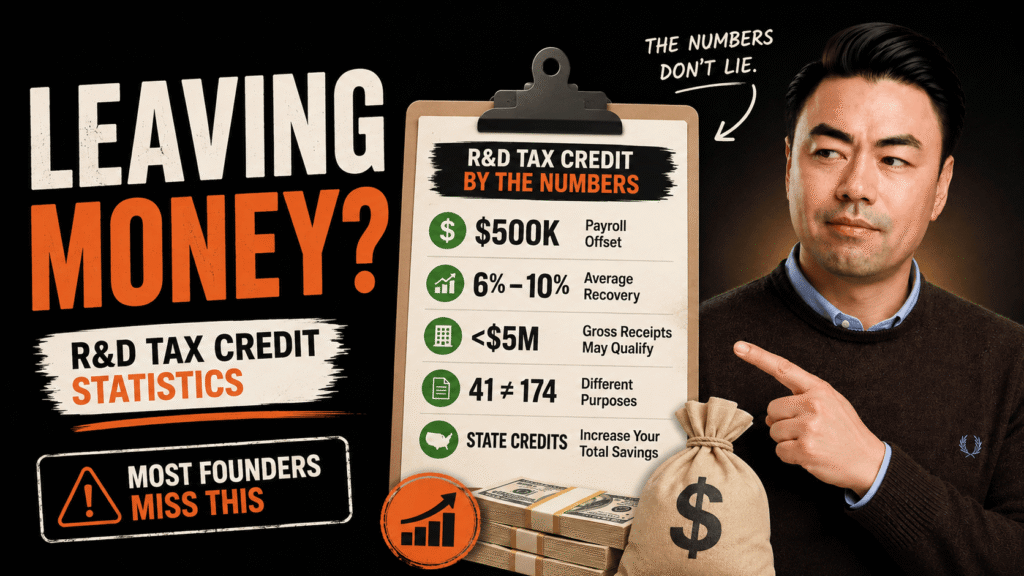
- Then: R&D Tax Credit Statistics Every Founder Should Know to see the latest limits, payroll tax offsets, and key numbers every startup should Remember
These guides are designed to help founders make informed decisions before claiming the Federal Research and Development Tax Credit while avoiding the common mistakes that leave Unclaimed tax savings money on the table .

[…] with our next guide: 15 Questions Founders Ask About The R&D Tax Credit, where we answer the most common questions startups have about eligibility, Internal Revenue Code […]
Comments are closed.