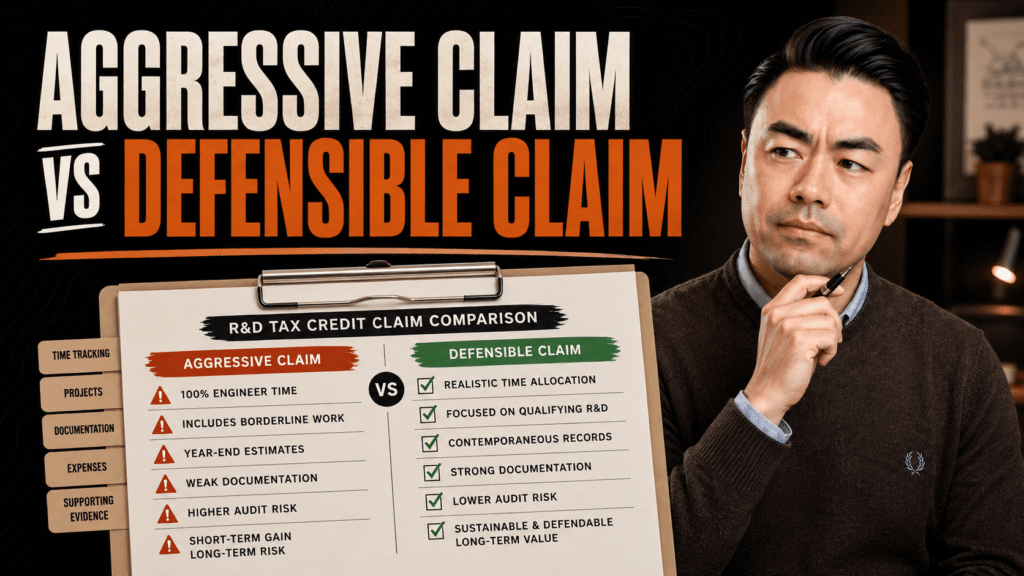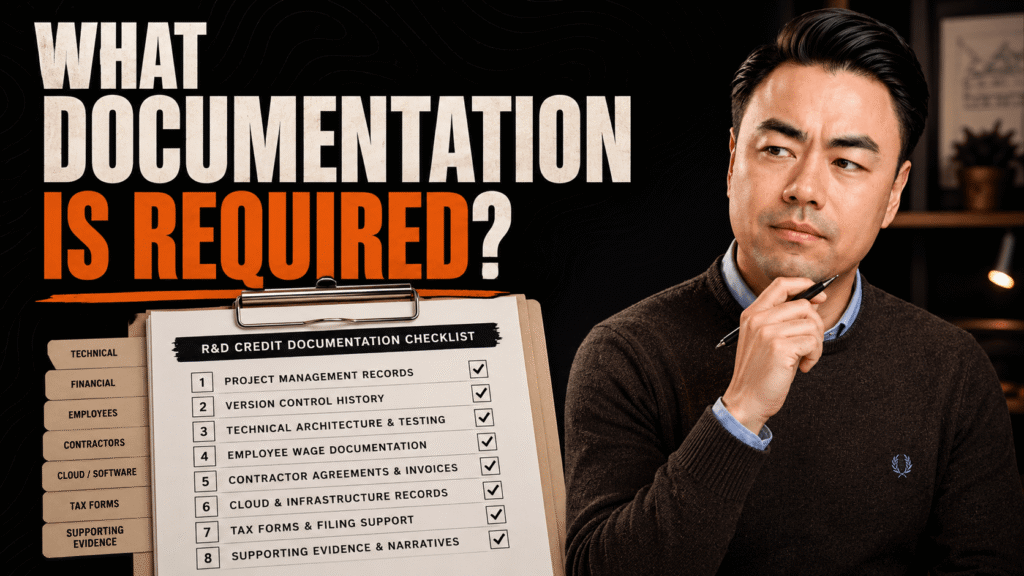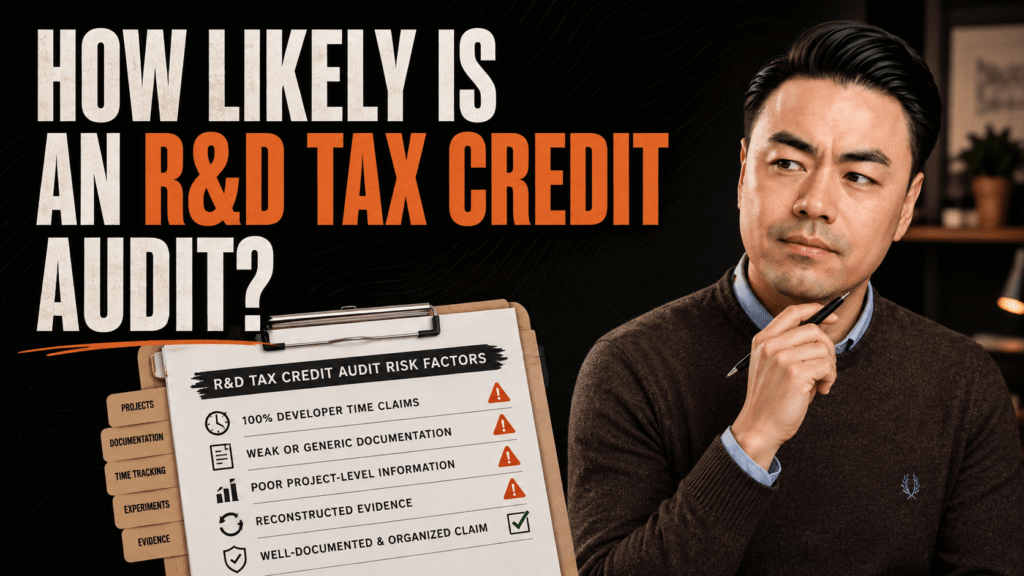
The difference between a rejected R&D tax credit claim and a defensible one is not whether your startup has documentation. Most companies already have Jira tickets, GitHub history, and cloud invoices.
The difference is whether those records prove why the work was performed, what technical uncertainty existed, and how your team experimented to find a solution.
The IRS is not looking for a folder full of random documents. It is looking for evidence that connects your engineering process to the requirements of the R&D credit.
This is why strong documentation must be created during development, not reconstructed after the tax year ends.
Jira And Project Management Documentation Examples
Project management tools often become some of the strongest evidence during an R&D review because they show how your team approached technical challenges.
Weak Documentation Example
Ticket Title:
“Fix login system issues”
Description:
“Login errors were occurring. The developer fixed database connection problems. Spent 15 hours.”
Why it fails:
This looks like routine maintenance. It does not explain:
- What technical uncertainty existed
- Why the problem was difficult to solve
- What alternatives were considered
- How the team tested possible solutions
The IRS could view this as normal software maintenance rather than qualified research.
Defensible Documentation Example
Ticket Title:
“Resolve multi-tenant database deadlock failures under high concurrency”
Description:
“During load testing with 10,000 concurrent requests, the PostgreSQL connection system produced repeated deadlock failures. The team evaluated whether to redesign connection pooling or introduce a custom caching layer to improve system stability.”
Engineering Notes:
- Tested connection pooling adjustments
- Measured latency impact
- Compared alternative caching approaches
- Implemented custom Redis buffering solution
- Reduced response latency from 120ms to 40ms
Why it works:
This documentation demonstrates the elements discussed in The Four-Part IRS Test Explained For Startup Founders:
- A technical uncertainty existed
- Multiple solutions were evaluated
- Testing was performed
- A solution was developed through experimentation
GitHub And Version Control Documentation Examples
Many startups assume GitHub history automatically creates an audit defense.
It does not.
GitHub proves that development happened. It does not automatically explain why the development qualified.
Weak Documentation Example
Commit message:
“Updated backend code”
or
“Fixed bugs and pushed to main”
Why it fails:
The auditor cannot determine:
- What problem was being solved
- Whether experimentation occurred
- Whether the change involved technical uncertainty
This type of metadata provides activity, but not context.
Defensible Documentation Example
Commit message:
“Implemented custom data transformation pipeline to reduce memory consumption during large dataset processing.”
Pull request description:
“Current architecture loads entire JSON payloads into memory, causing failures during enterprise-scale imports. Tested streaming architecture and batch-processing alternatives. New pipeline reduced memory usage by 34% while maintaining processing accuracy.”
Why it works:
The record shows:
- The technical limitation
- The hypothesis
- The alternative approaches tested
- The measurable outcome
This type of evidence helps protect claims involving software development, AI systems, and complex infrastructure.
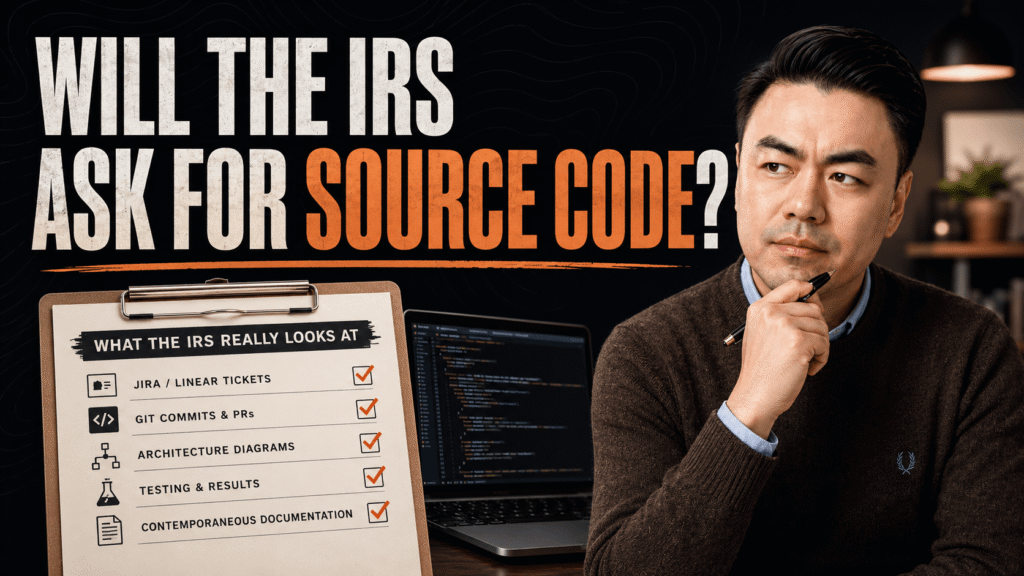
It also supports the principle explained in Will The IRS Ask For Source Code? auditors typically want proof of the development process, not your entire proprietary codebase.
Cloud Compute Documentation Examples
For AI and software companies, cloud documentation can become one of the most valuable areas of support.
However, a monthly cloud invoice alone is rarely enough.
Weak Documentation Example
A single AWS invoice showing:
EC2 Services $10,000
with no separation between:
- Production servers
- Testing environments
- Training infrastructure
- Experimental workloads
Why it fails:
The IRS cannot determine which costs supported qualified research and which supported normal business operations.
Defensible Documentation Example
Separate cloud environments:
Production Account
- Customer-facing applications
- Live database operations
- Standard hosting
Development/Staging Account
- Experimental deployments
- QA testing
- Performance benchmarking
AI Training Cluster
- Model training runs
- Algorithm evaluations
- Hyperparameter experiments
Additional support:
- Resource tags
- Instance records
- Training logs
- Experiment history
This is especially important for AI companies where GPU infrastructure can represent a significant portion of research expenses.
It connects directly with Does AI Model Training Qualify For R&D Credits? and The Hidden Value Inside Product Development Costs.
The Biggest Documentation Mistake Startups Make
We learned an expensive lesson by assuming our tools automatically created an audit-ready record.
We had Jira.
We had GitHub.
We had cloud invoices.
But the information inside those systems was incomplete.
Our developers were moving quickly, so tickets said things like “fix bug” and commits said updated backend. The systems captured activity, but they failed to capture the technical reasoning behind that activity.
When reviewed, those records looked like routine development instead of experimental research.
The lesson was simple:
Tools do not create defensible documentation. Engineering context does.
How To Build Better Documentation Starting Tomorrow
You do not need to slow down your engineering team.
You only need small workflow changes:
- Add the technical uncertainty to complex Jira tickets
- Document alternative approaches considered
- Preserve GitHub pull request discussions
- Separate production and research cloud environments
- Record testing results and performance improvements
The strongest R&D claims are built during development.
When every engineering decision leaves behind a clear technical footprint, your documentation becomes more than paperwork.
It becomes your audit defense.