
Most of the founders assume R&D only happens inside laboratories. The reality is much broader and it is also shocking for many of them . If your team is solving technical uncertainty through engineering or scientific experimentation, your work may possibly qualify for the Federal R&D Tax Credit under Internal Revenue Code Section 41.
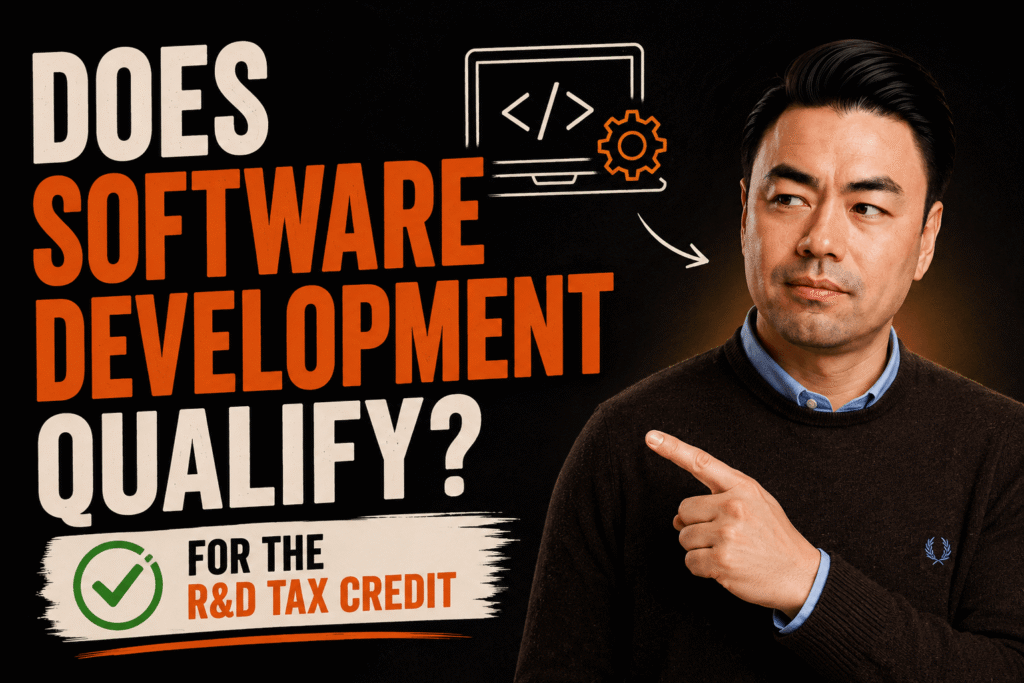
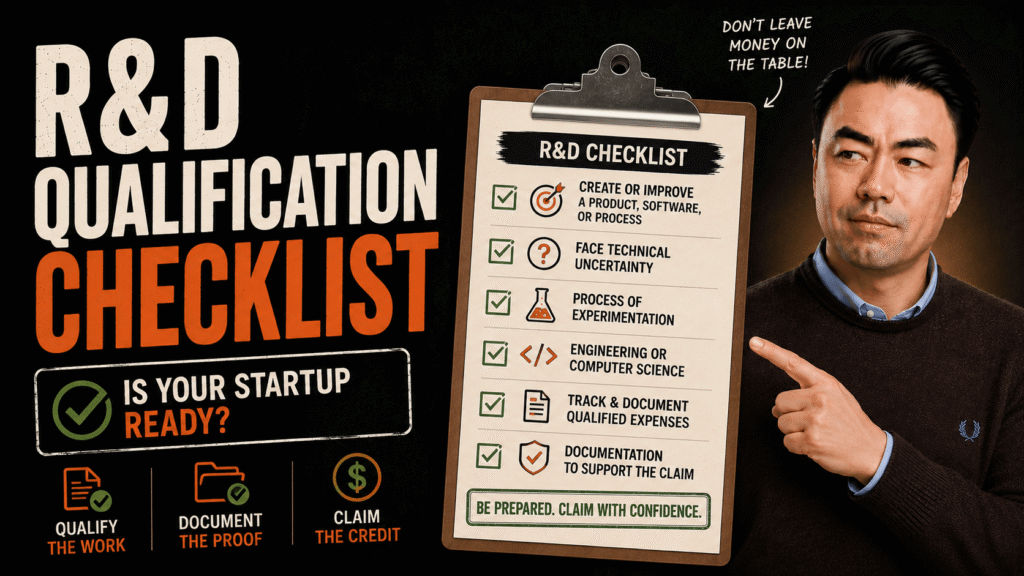
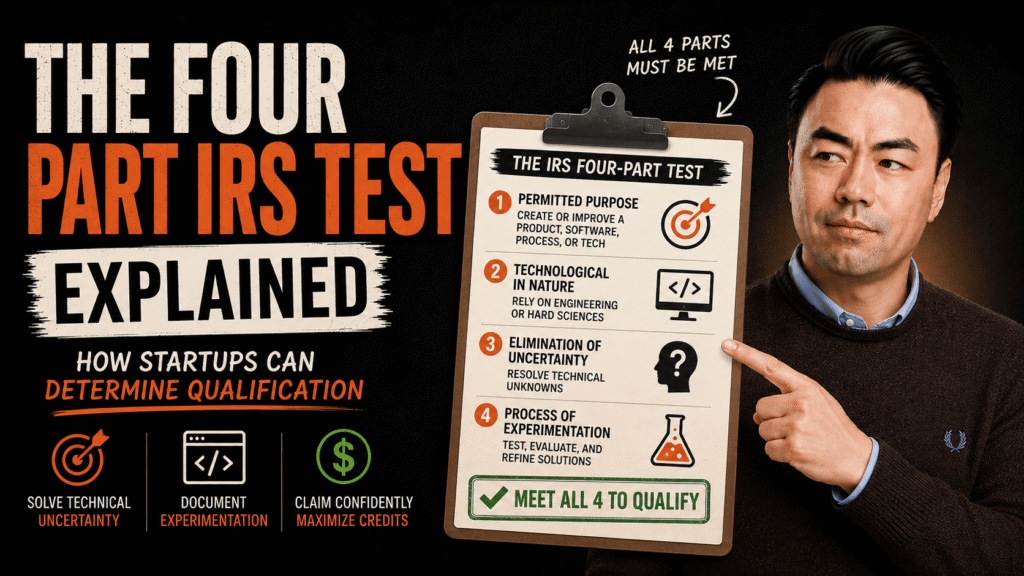
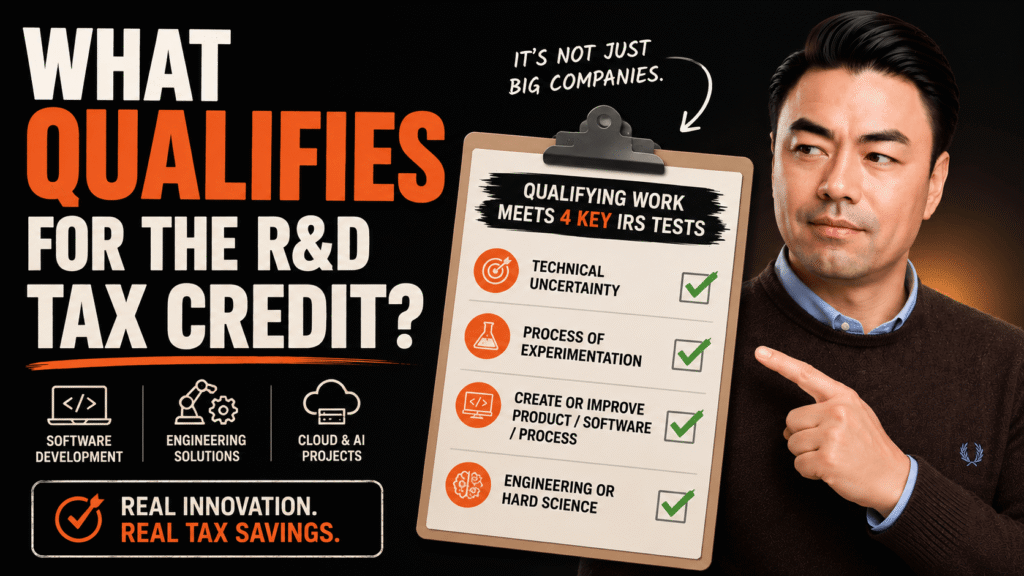
Understanding with real examples is often the fastest and easiest way to determine whether your projects qualify or not . Read our guides on What Qualifies For The R&D Tax Credit?, The Four Part IRS Test Explained, and the R&D Qualification Checklist before reviewing these examples.
1. Developing New Software
Building new software that requires technical experimentation often qualifies for the Federal Research and Development Tax Credit. The focus is not on writing code alone but on solving technical uncertainty.
Qualifying work may include developing SaaS platforms, AI applications, payment systems, cybersecurity tools, or enterprise software where engineers must evaluate multiple technical approaches before reaching a solution.
A startup building a customer analytics platform may test several database architectures before finding one that supports millions of daily transactions with acceptable latency.
At R&D Tax Advisors, our Software Qualification Framework identifies which development sprints satisfy the IRS requirements while separating routine coding from qualifying research. The founder need’s to understand one thing for sure . they need to document each and every activity that were happening at the same time after recognizing which of them is a qualified activity because it makes the claiming process more smother
2. Building Artificial Intelligence And Machine Learning Models
Artificial Intelligence projects frequently qualify because they involve continuous experimentation and technical uncertainty.
Teams often compare multiple algorithms, optimize model performance, improve inference speed, and reduce training costs before arriving at a workable solution.
For example, an AI startup developing fraud detection software may evaluate several machine learning models before achieving the desired accuracy.
Our AI Innovation Mapping System documents every experiment to support defensible Artificial Intelligence R&D Tax Credits.
3. Creating Functional Prototypes
Prototype development is one of the strongest indicators of qualifying research. The IRS rewards experimentation rather than guaranteed success.
Prototypes allow engineering teams to test new designs before commercial production begins.
Whether building a medical device prototype or a robotics proof of concept, documenting each design iteration strengthens the claim.
Our Prototype Evidence Framework captures testing activities from the first design through the final version.
4. Improving Manufacturing Processes
Engineering new manufacturing methods often qualifies even when the final product remains unchanged.
Companies regularly experiment with automation, robotics, production efficiency, and quality improvements to overcome technical challenges.
A manufacturer redesigning an assembly process to reduce production defects is performing technical experimentation rather than routine operations.
Our Manufacturing Innovation Matrix links engineering improvements directly to qualifying activities.
5. Solving Software Scalability Challenges
Finding new ways to improve performance, reliability, or scalability may qualify when engineers face genuine technical uncertainty.
Development teams frequently redesign databases, optimize APIs, improve cloud infrastructure, or build distributed systems capable of handling increasing demand.
A SaaS company migrating from a monolithic application to a microservices architecture often evaluates multiple technical solutions before selecting the final design.
Our Performance Optimization Framework documents those engineering decisions as they occur.
6. Designing Custom Engineering Tools
Creating custom tooling because commercial solutions cannot solve your technical problem often qualifies.
This may involve specialized manufacturing fixtures, testing equipment, embedded systems, or proprietary engineering software.
An aerospace supplier designing custom calibration equipment after standard tools failed to meet required tolerances is performing qualifying research.
Our Engineering Solution Framework identifies technical activities that extend beyond ordinary production.
7. Developing New Materials Or Formulas
Testing alternative materials, chemical formulations, or manufacturing inputs often qualifies under Section 41.
Engineers may evaluate strength, durability, flexibility, corrosion resistance, or environmental performance before selecting the optimal material.
A biotech company testing multiple formulations before improving product stability demonstrates technical experimentation.
Our Materials Innovation System documents each testing phase to support the claim.
8. Integrating Hardware And Firmware
Hardware and embedded software development frequently involves technical uncertainty that satisfies the IRS Four-Part Test.
Engineering teams often test communication protocols, sensor calibration, firmware optimization, and hardware compatibility before achieving reliable performance.
An IoT startup integrating custom firmware with proprietary sensors typically performs multiple rounds of testing before deployment.
Our Embedded Systems Framework organizes this technical evidence into audit-ready documentation.
9. Engineering Environmental Solutions
Projects designed to improve sustainability through engineering innovation can also qualify.
Companies developing recycling technologies, waste reduction systems, energy-efficient manufacturing processes, or environmentally friendly materials often perform significant technical experimentation.
A packaging company testing biodegradable materials while maintaining product durability may qualify for the credit.
Our Sustainable Innovation Framework helps document environmental engineering projects.
10. Testing Alternative Technical Designs
Systematically evaluating multiple engineering solutions is one of the clearest examples of qualifying research.
Teams may compare architectures, benchmark competing technologies, simulate performance, or evaluate different design methodologies before selecting the final approach.
An engineering firm designed the new industrial automation platform . Before reaching the final product they may have rejected several hardware configurations before identifying one that satisfies performance targets.
Our Alternative Design Evaluation Framework records each technical decision and failed approach to strengthen audit defensibility.
What Most Qualification Guides Completely Ignore
Here is the mistake we see most often: founders confuse difficult troubleshooting with qualified research. Working hard does not automatically create an R&D tax credit.
We watched one software startup spend weeks fixing severe database failures and API bottlenecks after launching its product. The engineering effort was intense, and leadership assumed every hour qualified because the team solved highly technical problems.
The issue was not the complexity of the work. It was the lack of documented experimentation. The engineers reacted to production issues instead of defining technical hypotheses, testing alternative architectures in controlled environments, documenting failed approaches, and recording why each solution succeeded or failed.
That distinction changed everything. Routine maintenance and reactive bug fixes generally do not satisfy the IRS Four-Part Test. Structured experimentation designed to eliminate technical uncertainty often does.
This is why we developed our Experiment First Framework. Before substantial development begins, we help startups identify technical uncertainty, define engineering hypotheses, document alternative solutions, and organize supporting evidence throughout the project instead of trying to reconstruct everything after the fact.
Turn Engineering Work Into A Defensible R&D Claim
Recognizing the qualified activity is only the first step. The real value comes from documenting each activity correctly while development is going on.
Continue your learning and understanding with these related resources:
- What Qualifies For The R&D Tax Credit?
- The Four Part IRS Test Explained
- R&D Qualification Checklist
- Does Software Development Qualify?
You can also go through our other pages as well Federal R&D Tax Credit Services, R&D Tax Credits For SaaS Companies, and R&D Tax Credit For AI Startups to understand how qualification rules apply across different industries and technologies.because the more you will read the more understanding you will develop about this topic and if you have any major concern you can directly schedule a meeting with me . I will help you out to give a clear picture about the RnD tax credit .
[…] Learn how to apply these rules in practice with our R&D Qualification Checklist, then explore 10 Examples Of Activities That Qualify to see how real startup projects fit within Internal Revenue Code Section […]
Comments are closed.