
Yes, software development often qualifies for the Federal R&D Tax Credit when engineers solve technical uncertainty through a documented process of experimentation. Simply writing code is not enough to qualify. You also need to innovate something as well so the question for software companies or startups is not about the building of the software it is about how software has been built that shows the real onground experimentation and permutation and combination before reaching to any resultant . The IRS looks at how the software was developed, not just the fact that it was built.
Many software startups miss valuable tax credits because they assume either all development qualifies or none of it does. The truth sits somewhere in the middle.
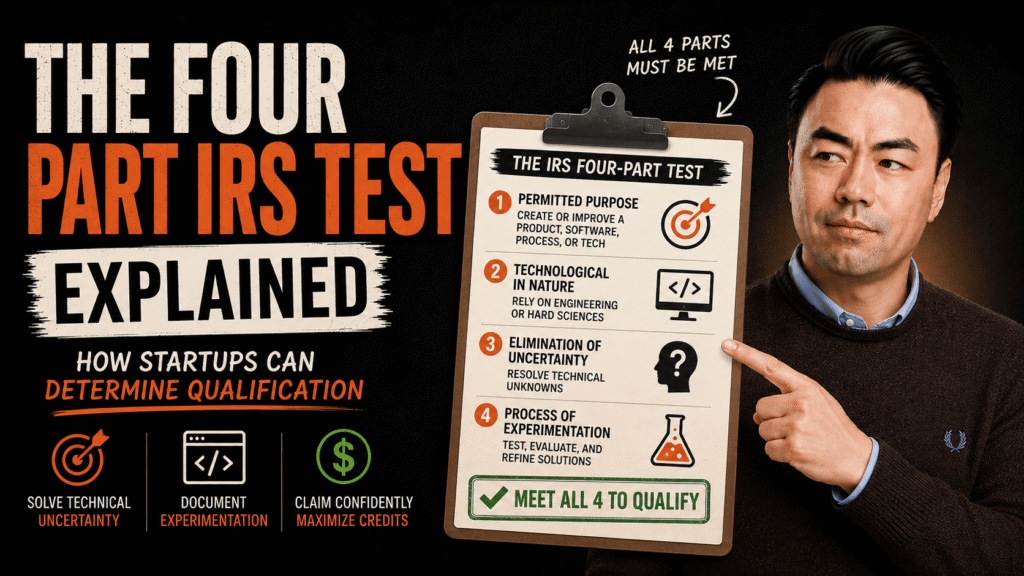
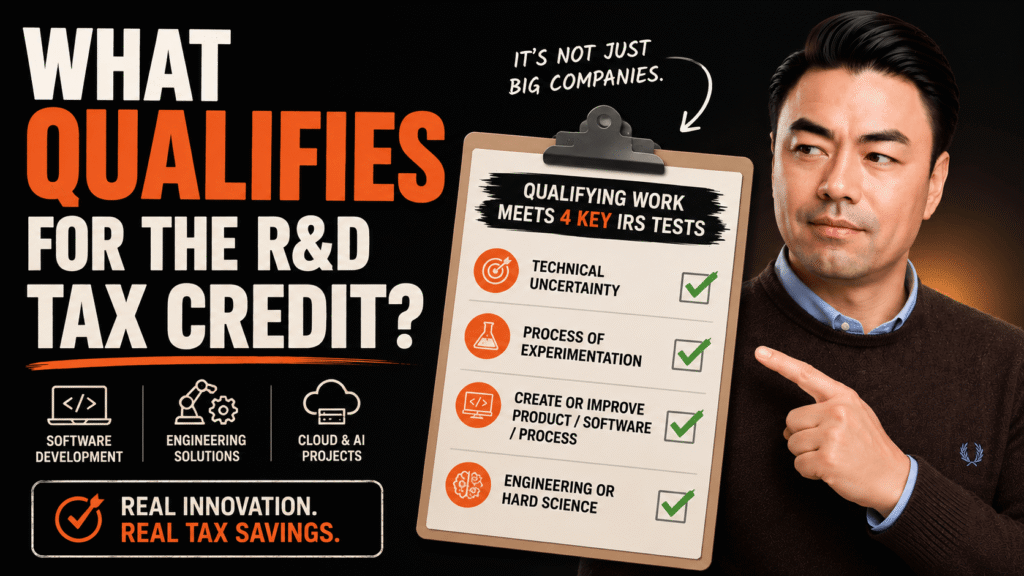
If you’re new to the credit, begin with What Qualifies For The R&D Tax Credit? and The Four Part IRS Test Explained before Evaluating your software projects.
When Does Software Development Qualify?
Software development qualifies when the work is technological in nature, involves technical uncertainty, and requires engineers to test multiple solutions before arriving at a working outcome.
The IRS evaluates software projects under Internal Revenue Code Section 41 using the same Four-Part Test applied to other research activities.
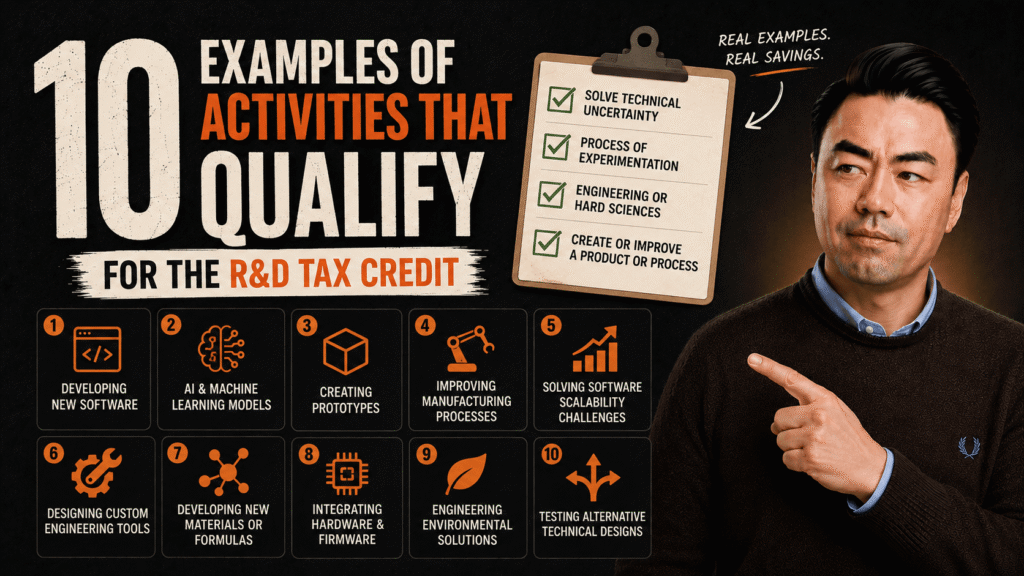
Common qualifying software projects include:
- Building SaaS platforms
- Developing Artificial Intelligence applications
- Creating machine learning algorithms
- Designing custom software architecture
- Engineering distributed cloud systems
- Building cybersecurity solutions
- Developing proprietary internal software
- Creating advanced API integrations
The goal is not simply to launch software. The goal is to solve technical problems that have uncertain outcomes.
At R&D Tax Advisors, we organize software projects using our Engineering Qualification Framework, helping founders distinguish qualifying development from ordinary coding.
What Software Activities Usually Qualify?
The strongest software claims involve engineers overcoming genuine technical challenges rather than implementing known solutions.
Examples include:
Designing New Software Architecture
Building scalable backend systems, distributed databases, or microservice environments often requires multiple architectural experiments.
Artificial Intelligence Development
Training AI models, optimizing inference speed, improving prediction accuracy, and reducing computational costs frequently qualify because engineers evaluate numerous technical alternatives.
Performance And Scalability Improvements
Engineering work that improves throughput, reduces latency, optimizes database performance, or supports higher concurrent workloads commonly satisfies the IRS requirements.
Advanced Security Engineering
Developing proprietary authentication systems, encryption methods, fraud detection engines, or cybersecurity platforms often involves significant technical experimentation.
Our Software Innovation Matrix documents these engineering decisions as they happen, creating stronger support for future claims.
What Software Activities Usually Do Not Qualify?
Routine software work generally does not qualify, even when experienced developers perform it.
Examples include:
- Standard bug fixes
- Routine maintenance
- Cosmetic user interface updates
- Basic software configuration
- Installing commercial software
- Standard framework implementation
- General technical support
These activities may be necessary for your business, but they typically do not involve the technical uncertainty required under the Federal Research and Development Tax Credit.
Our Routine Activity Filter helps separate everyday engineering work from qualified research before calculations begin.
Qualified Software Expenses
Once qualifying activities are identified, the next step is calculating your Qualified Research Expenses.
Software companies frequently include:
- Engineering wages
- Supervisory engineering wages
- Technical support wages
- Cloud computing used during development
- Eligible domestic contractor costs
For many SaaS startups, engineering payroll represents the largest component of the credit.
Our Software Cost Allocation Framework connects eligible expenses directly to qualifying technical activities.
What Most Software Companies Get Wrong
Here is the mistake we see most often: founders assume every hour spent writing code automatically qualifies for the R&D tax credit. That assumption can significantly weaken a claim.
We worked with a SaaS startup that invested heavily in product development and believed nearly its entire engineering payroll qualified because everyone on the team was writing software. During a tax review, the company discovered that it had grouped routine bug fixes, cosmetic interface updates, and basic implementation of commercial software alongside genuine engineering research.
The real qualifying work involved designing a new backend architecture capable of supporting high transaction volumes, improving database performance under unpredictable workloads, and testing multiple infrastructure designs before selecting the final solution. Unfortunately, because those activities were mixed together with routine maintenance, the documentation failed to clearly demonstrate where technical experimentation occurred.
The lesson was simple. Writing code alone is not what creates the credit. Solving technical uncertainty through documented experimentation does.
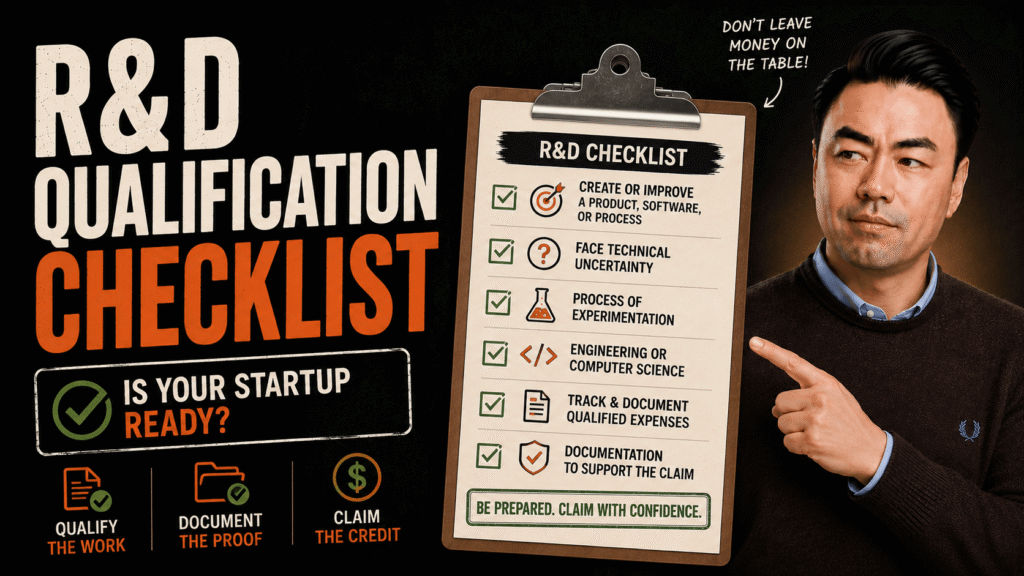
That is why we developed our Software Evidence Framework. Instead of tracking software projects by department or sprint alone, we identify where technical uncertainty begins, separate qualifying engineering work from routine development, and build documentation throughout the project instead of reconstructing it after release.
Build A Stronger Software R&D Tax Credit Claim
The most successful software R&D claims begin long before tax season. They begin with engineering teams documenting technical uncertainty while development is happening.
Continue learning with these related resources:
You can also explore our Federal R&D Tax Credit Services, R&D Tax Credits For SaaS Companies, and R&D Tax Credit For AI Startups to learn how software companies maximize credits while building claims that remain defensible during IRS review.
[…] Does Software Development Qualify? […]
Comments are closed.