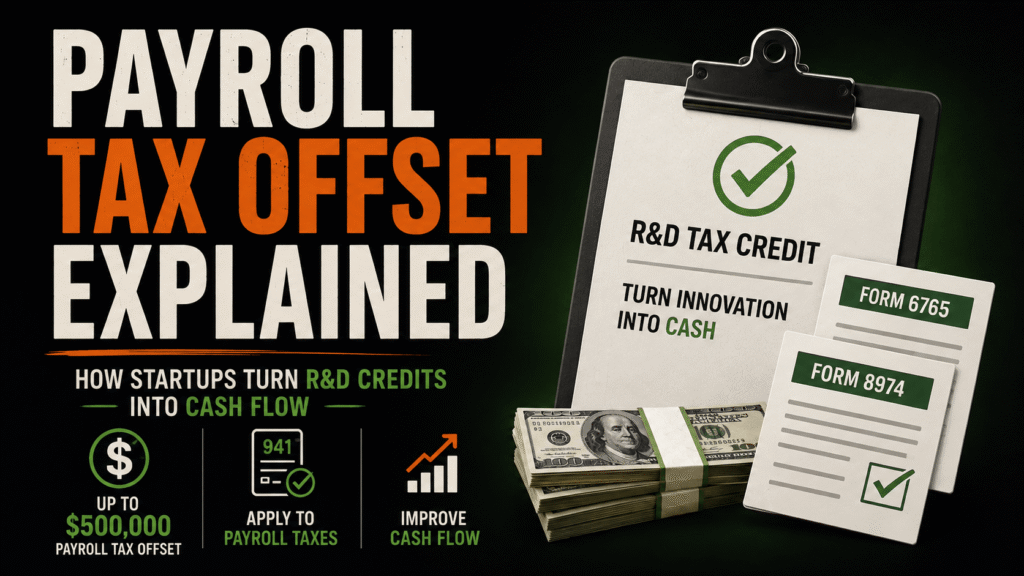
For an eligible startup, claiming the R&D payroll tax offset is a two-stage process: first calculate and elect the payroll tax credit with your income tax return, then use Form 8974 with your employment tax filing to apply the credit. The most important part is getting the election and filing sequence right because a mistake in the original filing can affect your ability to access the cash-flow benefit.
I believe a lot of experts out there make things a little difficult for the founder because they are not trying to help what is right for them at this time , they just trying to maximize the size of credit because their percentage is directly connected to the size of credit the greater the credit , the greater their share . this is because a lot of company and expert out there in the market become greedy and does not focus on the quality or the process that it takes to claim the credit
Step 1: Calculate Your Qualified Research Expenses
Before applying the payroll offset, you need to determine your Qualified Research Expenses (QREs) and calculate your federal R&D tax credit.
For a typical software or engineering startup, that may include:
- U.S. employee wages attributable to qualifying research
- 65% of eligible payments to qualifying U.S. contractors
- Certain supplies used in qualified research
- Qualifying cloud or computing costs associated with development and testing
But calculating expenses isn’t enough. Your underlying activities still need to satisfy the IRS requirements for qualified research.
This is where your engineering documentation matters. Jira tickets, Git commits, design documents, test results, and other contemporaneous records can help connect the expenses to the technical work being performed.
If you’re unsure whether your development work qualifies, start with What Qualifies For The R&D Tax Credit? and The Four Part IRS Test Explained.
Step 2: Make the Payroll Tax Election
Once your R&D credit has been calculated, an eligible small business must formally elect to apply a portion of the credit against payroll taxes.
That election is made through IRS Form 6765 with the company’s timely filed federal income tax return.
The key point is simple:
Calculating the R&D credit does not automatically mean you’ve elected the payroll tax offset.
The payroll election has its own requirements and timing rules. Founders should therefore coordinate the R&D calculation with whoever prepares the company’s federal tax return rather than treating the credit as an afterthought.
For the applicable tax year, the payroll tax election can be up to the statutory annual limit of $500,000, subject to the applicable rules.
Step 3: Wait for the Credit to Become Available
The payroll offset doesn’t necessarily reduce payroll taxes immediately after your income tax return is filed.
The credit generally becomes available beginning with the first calendar quarter that begins after the income tax return is filed.
For example, if an eligible company files its return during April, the first calendar quarter beginning afterward is Q3, meaning the payroll tax credit can generally begin being used with that quarter’s employment tax filings.
This timing matters when you’re building a startup cash-flow forecast.
A company expecting the offset to immediately reduce its next payroll tax payment can otherwise create a gap between expected cash savings and when those savings actually become available.
Step 4: Apply the Credit Through Form 8974
Once the credit is available, the company uses IRS Form 8974 to determine the amount of research credit available for use against its employer payroll tax liability.
The form is filed with the applicable employment tax return, such as Form 941 for quarterly federal employment taxes.
Your payroll provider or tax professional may handle the mechanics, but founders should still understand what is happening:
Form 6765 establishes the election. Form 8974 helps apply the available credit through the payroll tax system.
That distinction prevents one of the most common misunderstandings about the payroll offset.
Step 5: Track Any Remaining Credit
Your payroll tax liability may not be large enough to use the entire available credit immediately.
In that situation, the unused amount can generally be carried forward for use against eligible payroll taxes in subsequent quarters, subject to the applicable limitations and rules.
That means the value of the credit isn’t necessarily lost simply because your startup’s payroll tax liability is smaller than the credit available.
The Filing Mistake That Can Cost You Cash Flow
We learned this lesson the painful way.
We initially treated our R&D calculation and payroll election as two separate administrative tasks. We rushed through the corporate tax filing, intending to finalize our detailed QRE calculations later and simply amend the return.
That assumption was dangerous.
The payroll tax election has specific original-return filing requirements. You shouldn’t assume an amended return can be used to make an election that should have been made on the original timely filed return.
Our mistake wasn’t understanding the value of the credit. It was failing to respect the mechanics required to turn that credit into actual payroll tax savings.
For a startup depending on every month of runway, the lesson is straightforward:
Calculate early. Make the election correctly. Track the timing. Then coordinate Form 8974 with your payroll filings.
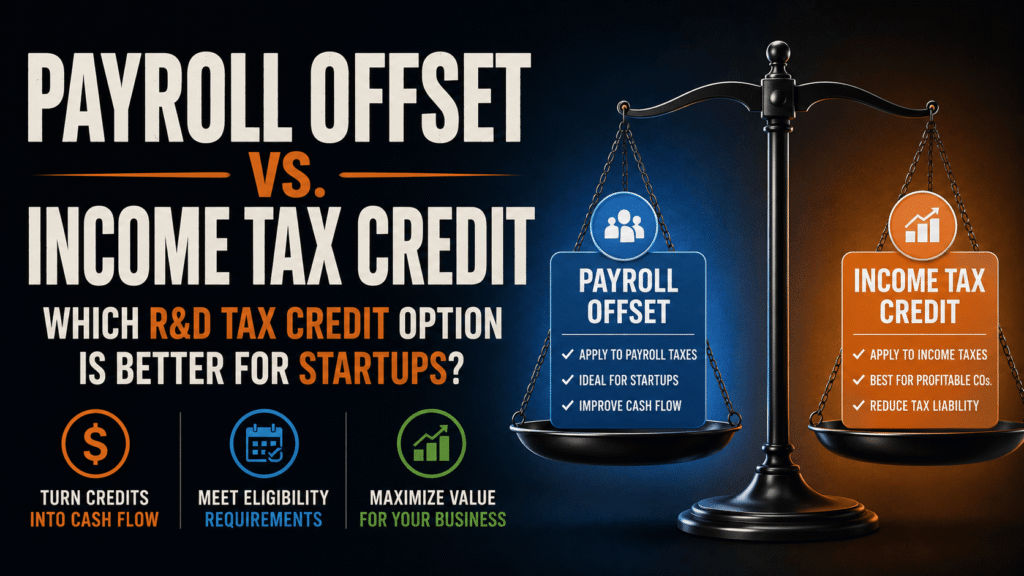
If you haven’t already, read Payroll Tax Offset Explained first for the eligibility requirements, then Payroll Offset vs. Income Tax Credit to understand which utilization path makes sense for your company’s financial position.