Generally, no. The IRS does not automatically require a software company to hand over its entire source-code repository during an R&D tax credit examination. The more important question is whether your company can substantiate that its software development involves qualifying technical uncertainty and a process of experimentation.
For software companies, that means the strongest audit trail is usually the documentation surrounding the development process, not millions of lines of proprietary code. The IRS’s software audit guidance focuses on evaluating whether the development activities satisfy the requirements of Section 41.
What Will the IRS Look At Instead?
Your everyday engineering records can provide much of the evidence needed to explain how your R&D actually happened.
For example:
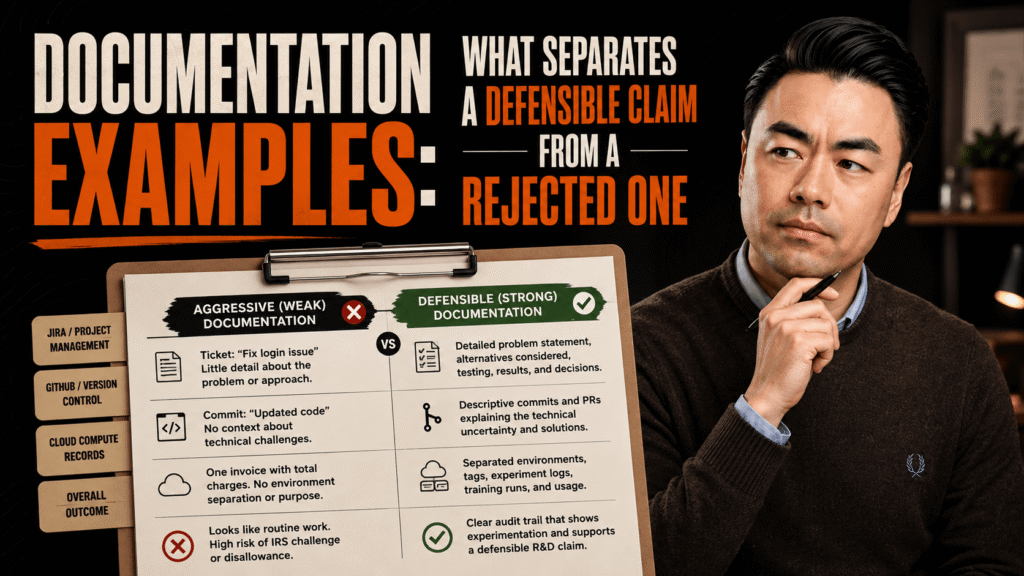
- Jira, Linear, or Asana tickets can show the technical uncertainty, alternatives considered, testing, and results.
- GitHub or GitLab records can establish development timelines, commits, pull requests, and technical discussions.
- Architecture diagrams can explain database structures, APIs, microservices, and other technical decisions.
- Testing records can demonstrate failed approaches, performance testing, error logs, benchmarks, and subsequent iterations.
The IRS specifically emphasizes contemporaneous documentation and other records that substantiate both the qualifying activities and associated expenses.
This is also why your documentation should connect technical work to the Four-Part Test rather than simply stating that an engineer “worked on software.” Your earlier guide on the four-part IRS test explained for startup founders can help establish that connection.
When Could Source Code Become Relevant?
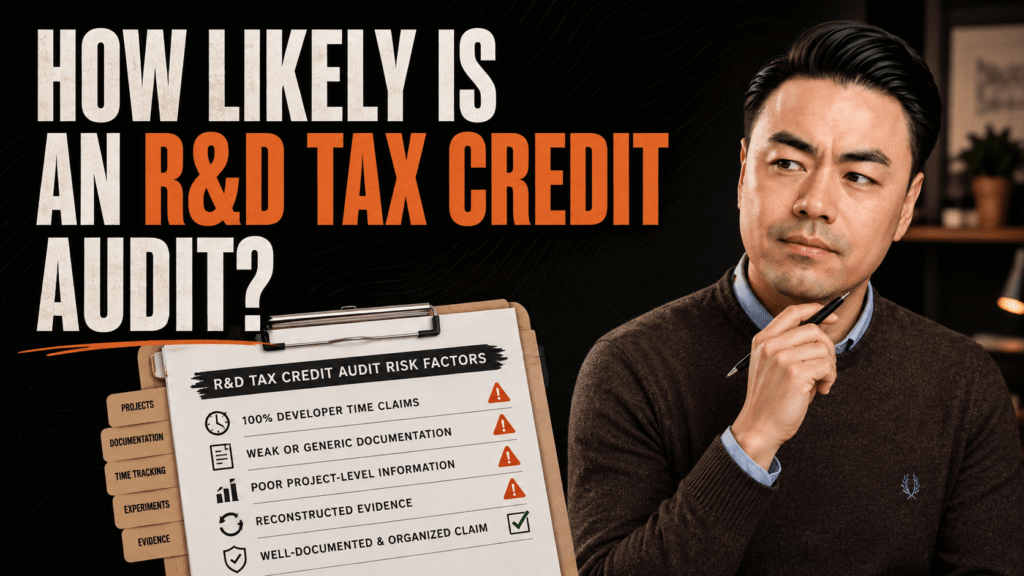
The bigger risk isn’t that the IRS routinely wants your entire codebase. It’s that weak or vague documentation can make deeper technical verification more important.
Imagine your R&D documentation says only:
“Built new backend architecture.”
That doesn’t explain what uncertainty existed, what alternatives your engineers considered, or how experimentation resolved the problem.
If your supporting records don’t adequately substantiate the claim, additional information may be needed during an examination. The IRS audit guidance specifically notes that examiners may use specialists to evaluate highly technical software development activities.
So the goal isn’t to prove your claim by showing as much code as possible. It’s to create enough credible technical evidence that the development process can be understood without relying on the codebase itself.
How Can You Protect Your Intellectual Property?
Software companies should still take confidentiality seriously.
If an auditor needs additional technical evidence, work with your tax and legal advisors to determine what information is actually necessary. Depending on the circumstances, supporting evidence might include limited code excerpts, architecture documentation, technical demonstrations, or other records rather than an unrestricted copy of your repository.
Your goal should be simple: prove the research without unnecessarily exposing unrelated proprietary technology.
The Documentation Mistake That Creates the Problem
We learned a painful lesson about the difference between writing code and documenting the journey behind the code.
Our engineers were building complex systems, but our technical summaries were weak. We assumed the sophistication of the product would speak for itself.
It didn’t.
When questions arose about our R&D activities, we had to work backward through Jira records, Git history, architecture decisions, and technical evidence to reconstruct what our engineers had actually been trying to solve.
That experience changed our approach. The lesson was not that source code is dangerous to an R&D claim. The lesson was that relying on source code to tell the entire R&D story is a documentation failure.
Build the Evidence Before an Audit
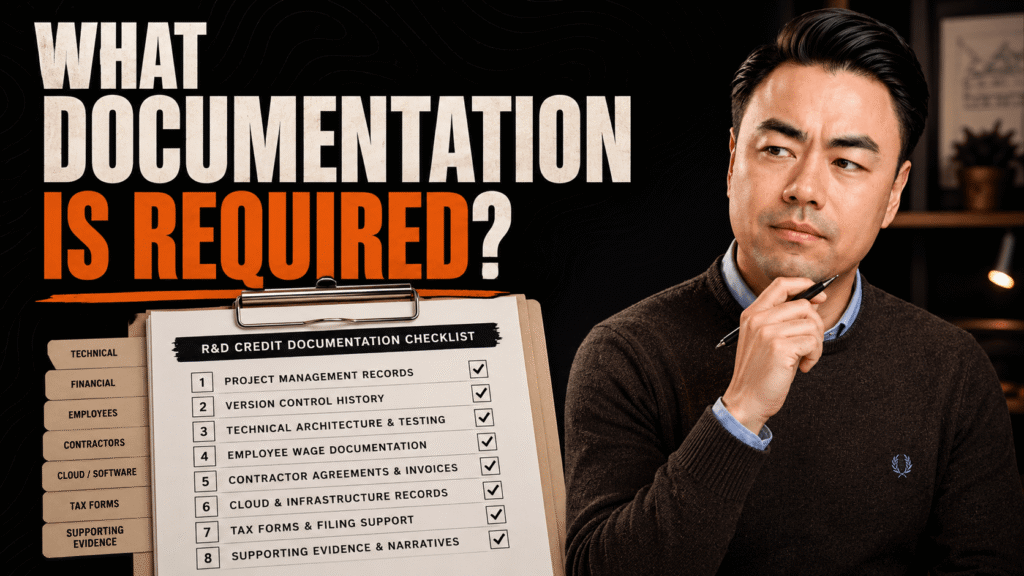
A defensible software R&D claim should be supported while the work is happening:
- Document the technical uncertainty.
- Record alternatives and experiments.
- Preserve GitHub/GitLab discussions and pull requests.
- Keep architecture and testing evidence.
- Connect technical projects to the employees and expenses being claimed.
The IRS requires taxpayers to maintain records sufficient to substantiate claimed research expenses, and inadequate substantiation can put the credit at risk.
That’s why documentation should be treated as part of the R&D process not something your team tries to recreate when an audit arrives.
For a broader look at what software development costs and activities can qualify, see R&D credits for software companies explained. And if you’re preparing your claim, How To Apply Payroll Offset Credits explains how the documentation ultimately connects to the credit-claiming process.
The safest approach isn’t preparing to hand over your entire codebase. It’s building such a strong contemporaneous record that your source code doesn’t have to carry the burden of proving your entire R&D claim.