The risk of an IRS examination is real, but there is no reliable single percentage that tells a startup exactly how likely its R&D tax credit claim is to be audited. What matters more is whether your claim is well-supported, consistent with your tax return, and backed by contemporaneous evidence.
For startups, the bigger concern should not be “Will the IRS audit me?” It should be “If the IRS asks questions, can I defend what I claimed?”
That distinction changes how you should approach R&D credit compliance.
What Can Increase Scrutiny?
Certain characteristics can make an R&D claim more difficult to defend.
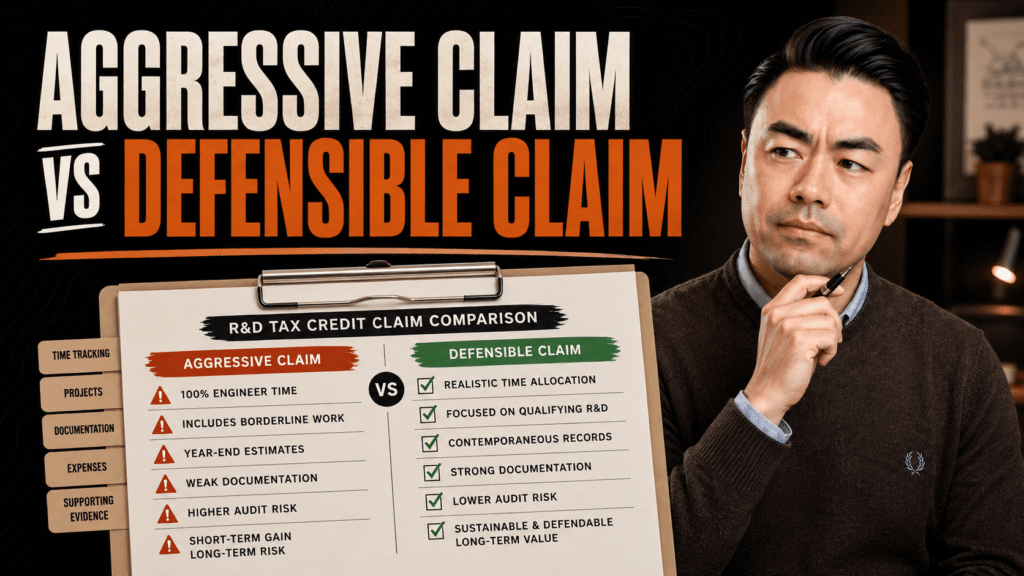
Claiming 100% of Developer Time
Developers can perform qualifying research, but they also spend time on meetings, administration, maintenance, customer support, and routine work.
Claiming that every hour of every developer’s year was qualifying research can therefore raise questions unless your records genuinely support it.
This is why companies should distinguish qualifying experimentation from routine development. Our guide on R&D credits for software companies explained covers how software activities can fall on either side of that line.
Weak or Generic Documentation
A technical narrative saying “we developed innovative software” isn’t strong evidence by itself.
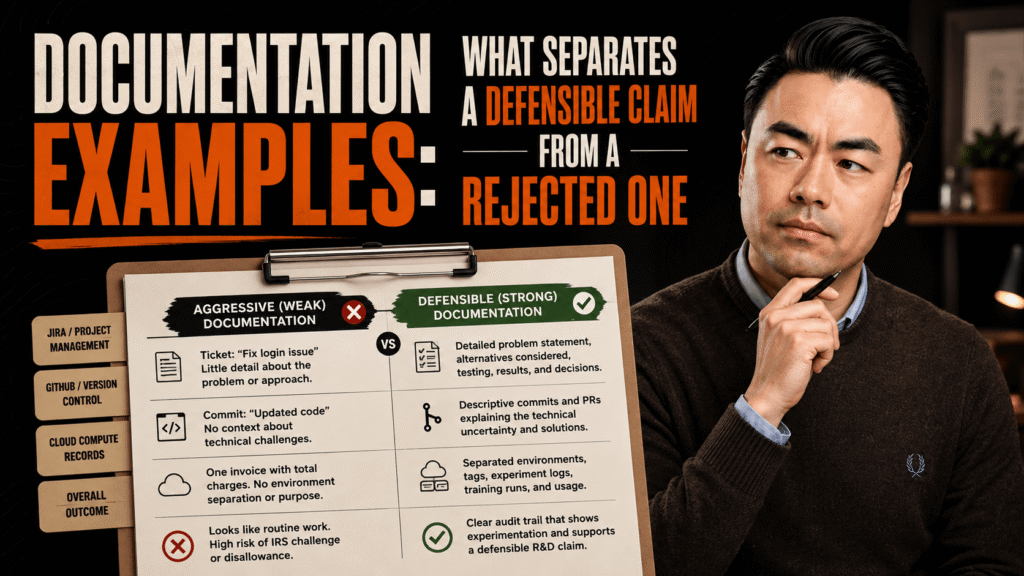
A defensible claim should connect specific projects to technical uncertainty, experimentation, and the resulting work. Jira tickets, GitHub discussions, architecture documentation, test results, and other contemporaneous records can make that connection much clearer.
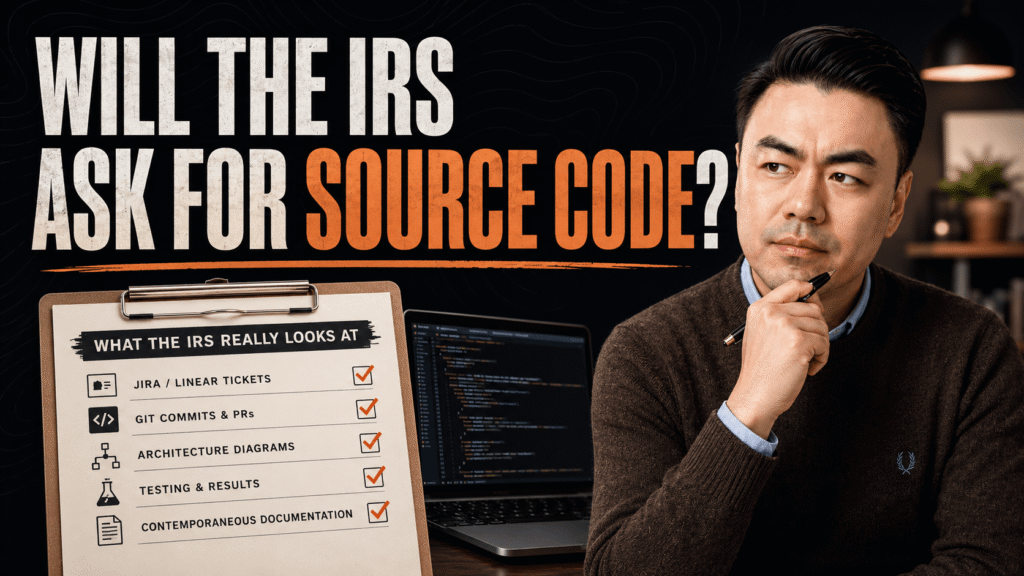
Our article on Will The IRS Ask For Source Code? explains why the development trail surrounding your code can be more useful than simply pointing to the codebase.
Poor Project-Level Information
The IRS has introduced additional business-component reporting requirements for Form 6765. For tax years beginning after 2025, Section G generally requires qualifying taxpayers to provide information for business components representing at least 80% of total QREs, subject to specified exceptions.
That makes project-level organization increasingly important.
Reconstructed Evidence
One of the most dangerous assumptions is that your team can recreate everything years later.
If an auditor asks how an engineering team arrived at a particular technical solution, a contemporaneous Jira ticket or pull-request discussion is far more useful than a generic narrative created after the fact.
What Happens If the IRS Examines Your Claim?
An examination doesn’t automatically mean your entire credit disappears.
There are several possible outcomes.
No change: Your documentation supports the qualifying activities and expenses, and the examination closes without changing the claim.
Partial adjustment: The IRS agrees that some activities qualify but determines that other activities or expenses don’t meet the requirements. Your credit is reduced accordingly.
Larger disallowance: If the company cannot substantiate the claimed activities or expenses, a much larger portion or potentially the entire claim can be challenged.
The important takeaway is that audit readiness is about evidence, not fear.
Our Expensive Lesson
We learned this the hard way when we treated R&D compliance as a paperwork exercise rather than an ongoing process.
We confidently claimed 100% of our developers’ time because the company was building a technically sophisticated platform. But our records didn’t adequately distinguish experimental engineering from routine development.
When questions came, we couldn’t produce the contemporaneous Jira records and GitHub discussions we needed. Instead, we were relying too heavily on reconstructed explanations and generic technical narratives.
That experience taught us something simple:
A strong R&D claim isn’t created when the tax return is filed. It’s created while the research is happening.
How Do You Reduce the Risk?
You don’t need to eliminate every possibility of an IRS examination. You need to make your claim defensible if questions arise.
Start with five habits:
- Document technical uncertainties as projects begin.
- Record experiments, alternatives, failures, and results.
- Preserve engineering-system records rather than recreating them later.
- Separate qualifying research from routine development.
- Keep your technical documentation connected to the QREs being claimed.
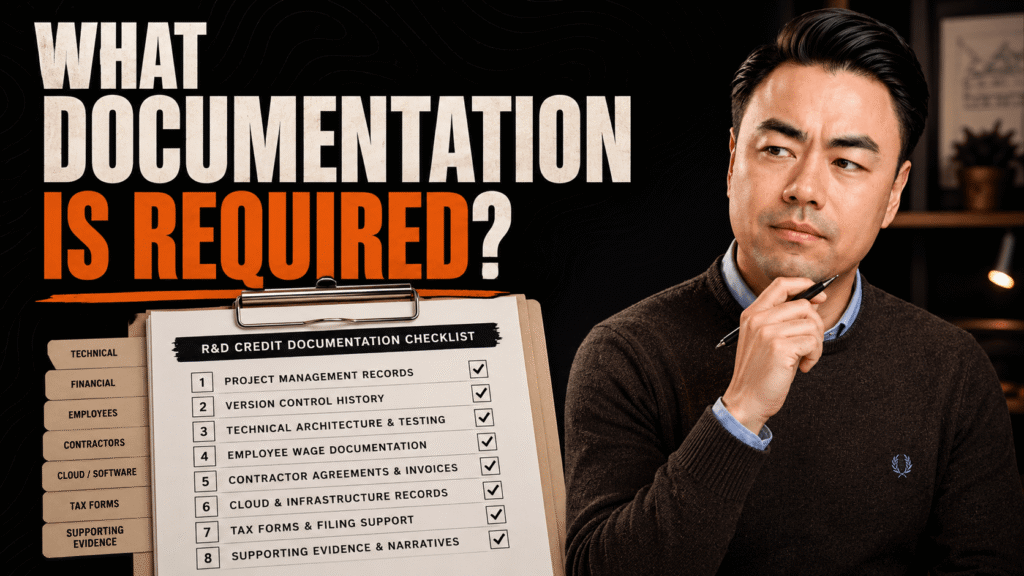
This approach also makes the What Documentation Is Required? process much easier because the evidence already exists.
And if you’re preparing a federal R&D credit claim, understanding the underlying Four-Part IRS Test helps your engineering and tax teams document the right information from the start.
The goal isn’t to build a claim that assumes the IRS will never ask questions. It’s to build one that remains defensible if they do.